

Favorites: Albums — 326 to 350
When I say I'm in love with music, you best believe I'm in L-U-V...

#326: New York Dolls (1973)
Artist: New York Dolls
Mercury Records
A foundational, swaggering slab of proto-punk infrastructure, the New York Dolls' 1973 self-titled debut serves as the undisputed ground-zero blueprint for multiple rock revolutions. The album effectively splintered the timeline: the bloated 1980s hair metal scene completely hijacked their trashy, androgynous aesthetic (with only outliers like Mötley Crüe and Faster Pussycat successfully capturing any of their actual, dangerous sleaze), while the legendary 1970s punk movement absorbed their raw, unvarnished musical attitude to build an entirely new culture. Capturing that volatile, high-velocity energy on tape was incredibly difficult, and Todd Rundgren stands as the sole producer who managed to harness their chaotic machinery in the studio without diluting its power. The fact that the Rock and Roll Hall of Fame completely failed to induct them while essential architects David Johansen and Sylvain Sylvain were still alive is a profound institutional oversight. Yet, their cultural footprint remains indestructible; this is the very band that Morrissey has worshipped as literal deities since the days he was still letting people address him by his first name. It is a vital, deeply influential, and thoroughly unapologetic rock and roll record.

#327: Ambient 1: Music for Airports (1978)
Artist: Brian Eno
Polydor / E.G. Records
The literal genesis of an entire musical movement, 1978's Ambient 1: Music for Airports captures Brian Eno officially coining the term "ambient music" and establishing its fundamental architecture. Built on staggered, asynchronous tape loops of delicate pianos, synthesizers, and ethereal vocal arrangements, Eno engineered a sonic grid explicitly designed to induce calm and defuse the clinical anxiety of airport terminals. It operates on the brilliant, paradoxical philosophy that music should be able to accommodate many levels of listening attention without enforcing one in particular—as ignorable as it is interesting. The personal acquisition lore attached to this specific CD (an early 2000's reissue on Virgin) is structurally perfect: scoring the quietest, most deeply serene album ever constructed at a small Philadelphia record shop in October 2004, just down the street from the Khyber right before heading in to catch a high-velocity, heavy-hitting set from a long-time friend and collaborator like Mike Watt. That jarring transition from weightless, generative ambient loops straight into a thunderous punk rock bass clinic completely embodies the chaotic, beautiful duality of a dedicated physical media archive. In a brilliant piece of full-circle musical trivia, those two vastly different sonic worlds would eventually collide directly when Watt provided the low-end architecture for Chris Schlarb's Psychic Temple, playing bass on a stunning 2016 reimagining of the album's opening track, "1/1."
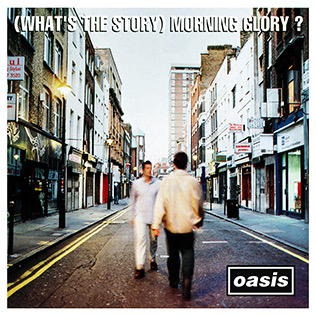
#328: (What's The Story) Morning Glory? (1995)
Artist: Oasis
Creation Records
1995's (What's The Story) Morning Glory? captures Oasis strapping a rocket directly to their stadium-rock ambitions. Noel Gallagher engineered a bulletproof grid of Beatles-indebted pop hooks, while producer Owen Morris aggressively compressed the master tapes to create an impenetrable, heavily distorted wall of sound. While millions of consumers were drawn in by the ubiquitous acoustic jangle of the lead singles, purchasing the record initially just to lock down the sprawling, psychedelic, seven-minute closing epic "Champagne Supernova" is a vastly superior point of entry. However, the true historical weight of this entry lies in the physical media butterfly effect it triggered. That single, unassuming CD acquisition eventually escalated into a major international expansion of the vinyl archive, resulting in a stash of over a dozen rare Oasis bootlegs — alongside essential Noel's High Flying Birds and Liam solo cuts — all meticulously sourced and exported by a dedicated connection in Glasgow. It is a towering, arrogant, and undeniably brilliant piece of guitar-pop machinery that rightfully demands massive shelf space.
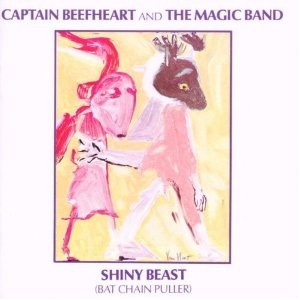
#329: Shiny Beast (Bat Chain Puller) (1978)
Artist: Captain Beefheart and the Magic Band
Warner Bros. Records
A brilliant, deeply eccentric return to form, 1978's Shiny Beast (Bat Chain Puller) captures Captain Beefheart actively dismantling his brief, ill-advised attempt at commercial accessibility. After enduring the heavily panned, smoothed-out pop machinery of his Mercury Records era, Don Van Vliet was completely ready to embrace his avant-garde roots once again. The structural history of this record is a legendary piece of music industry chaos: originally recorded for Frank Zappa’s DiscReet label, the master tapes for the original Bat Chain Puller were swallowed by severe legal disputes, remaining locked in a vault until long after Van Vliet's passing. Refusing to be sidelined by corporate gridlock, Beefheart assembled a new Magic Band and entirely re-engineered the material for Warner Bros. The result is a bizarre, highly rhythmic collision of free jazz, Delta blues, and spoken-word surrealism. It serves as the exact, necessary structural bridge that allowed him to fully reclaim his artistic integrity, perfectly setting the stage for his final two, aggressively angular magnum opuses for Virgin and Epic. It is a vital document of a true musical visionary successfully getting his groove back.

#330: The Grimmrobe Demos (1999)
Artist: Sunn O)))
Hydra Head / Southern Lord
A massive, foundational slab of pure amplifier worship, The Grimmrobe Demos completely obliterates the traditional architecture of heavy metal. Stephen O'Malley (SOMA) and Greg Anderson (The Lord) engineered a terrifying sonic grid built entirely on extreme sustain, punishing volume, and deeply sub-harmonic frequencies. By tuning their guitars down to a subterranean Drop-A, they effectively bypassed standard melody to focus entirely on the physical weight of sound. For a dedicated collector, the physical media experience of this album is an absolute endurance test for any high-fidelity sound system. Dropping the needle and allowing a single, heavily distorted, endlessly vibrating chord to slowly mutate, feedback, and decay across an entire side of vinyl is less about listening to a song and more about experiencing a shift in atmospheric pressure. It is a slow, crushing, and completely unapologetic masterpiece of drone metal machinery.
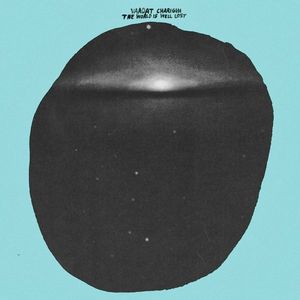
#331: The World Is Well Lost (2013)
Artist: Vaadat Charigim
Burger Records / Anova Music
A stunning, heavily textured masterclass in modern shoegaze, 2013's The World Is Well Lost captures Tel Aviv's Vaadat Charigim engineering a massive, swirling wall of delay and reverb. The trio successfully hijacked the foundational 1990s sonic blueprints of bands like Ride and Slowdive, completely recontextualizing that dreamy, chorus-drenched aesthetic with the tense, isolated energy of their environment. One of the most fascinating and brilliant structural choices on the record is frontman Juval Haring's decision to deliver the vocals entirely in Hebrew. Rather than serving as a barrier to international listeners, the language completely blends into the mix, transforming his voice into another beautiful, melancholic instrument buried deep within the towering guitar noise. It is an incredibly atmospheric, deeply emotional piece of underground audio machinery that beautifully proves how effectively the global language of distortion translates across borders.
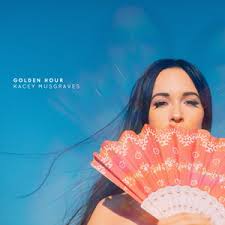
#332: Golden Hour (2018)
Artist: Kacey Musgraves
MCA Nashville
A lush, wildly successful dismantling of the modern Nashville studio machinery, 2018's Golden Hour captures Kacey Musgraves completely transcending the boundaries of her genre. From the arrival of her debut single "Merry Go 'Round," it was entirely evident that Musgraves was essentially a razor-sharp indie-folk songwriter operating deep behind enemy lines in the country music industry. While Music Row was busy saturating the grid with formulaic, highly polished bro-country and stadium-rock posturing wearing cowboy hats, Musgraves pivoted into the stratosphere. She engineered a stunning, psychedelic architecture affectionately dubbed "cosmic country," fearlessly threading vocoders, disco-inflected basslines, and sweeping pop synthesizers into her acoustic framework. The album's crowning achievement isn't just its flawless structural execution, but the massive industry vindication it delivered. Taking home the Grammy for Album of the Year — leaving the mainstream country establishment completely empty-handed in her wake — was the ultimate proof that authentic, boundary-pushing songwriting will always outlast the corporate bullshit. Notably, the album also triggered the glorious resurrection of the classic, heavy-typography MCA Records logo, providing the perfect physical stamp for a modern classic.
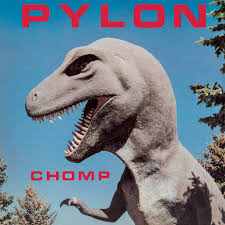
#333: Chomp (1983)
Artist: Pylon
DB Recs
A relentless, highly kinetic masterpiece of post-punk architecture, 1983's Chomp is the undeniable, angular heartbeat of the legendary Athens, Georgia underground. While the mainstream historical focus often rests entirely on their peers in the B-52s and R.E.M. — the latter of whom famously championed Pylon as the greatest band in America and covered the track "Crazy" on a Fables of the Reconstruction-era B-side to prove it (the recording opens Stipe & Co.'s B-sides album Dead Letter Office to further prove it) — this record operates on a completely different structural grid. It is a masterclass in rhythm-driven studio engineering. Guitarist Randall Bewley actively rejected traditional rock soloing, instead utilizing his instrument as a jagged, percussive tool perfectly locked into the tight, driving machinery of bassist Michael Lachowski and drummer Curtis Crowe. Suspended directly over this highly danceable, mechanical framework, frontwoman Vanessa Briscoe Hay delivers a wildly erratic, commanding vocal performance. It remains a brilliant, heavily textured, and deeply influential monument to the power of DIY groove and unconventional song structure.
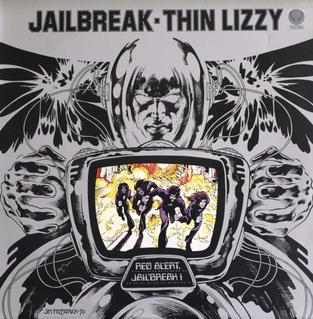
#334: Jailbreak (1976)
Artist: Thin Lizzy
Vertigo Records
A towering, fiercely romantic masterpiece of 1970s hard rock architecture, 1976's Jailbreak is the definitive canvas for the true modern-day poet laureate of Ireland, Phil Lynott. While his contemporaries were largely trading in standard, arena-rock posturing, Lynott operated on a vastly superior literary grid, effortlessly weaving deep Celtic mythology, street-level cinematic storytelling, and working-class romanticism directly into the heavy machinery of the band. This album serves as the exact moment Thin Lizzy's legendary, dual-lead guitar attack—engineered with terrifying precision by Scott Gorham and Brian Robertson—finally locked into perfect synchronization. While the record's commercial footprint is heavily defined by the indestructible, ubiquitous anthem "The Boys Are Back in Town," its true structural genius lies in its depth. Navigating the epic, western narrative of "Cowboy Song" straight into the heavy, martial, sword-swinging riffage of the closing track, "Emerald," showcases a band operating at the absolute peak of their compositional powers. It is a vital, swaggering monument to Irish rock and roll.
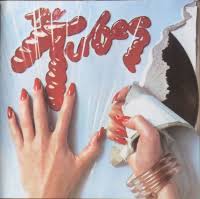
#335: The Tubes (1975)
Artist: The Tubes
A&M Records
A massive, hyper-theatrical collision of progressive rock musicianship, glam aesthetics, and biting social satire, The Tubes' eponymous 1975 debut LP completely scrambled the architectural grid of the San Francisco rock scene. Produced with sharp, dynamic clarity by industry veteran Al Kooper, the self-titled debut served as the foundational launchpad for the band's legendary, chaotic multimedia stage shows. Frontman Fee Waybill engineered a brilliantly cynical vocal performance, effortlessly shifting between bizarre characters to skewer the excess of the music industry and American consumerism. The absolute undisputed centerpiece of the record is the sprawling, eight-minute closing epic "White Punks on Dope." It is an anthem constructed with such venomous precision and heavy, driving guitar architecture that it transcended the band's cabaret roots to become a widely covered, indestructible piece of punk and hard rock history. It is a wildly entertaining, deeply subversive piece of studio machinery.
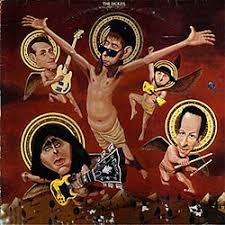
#336: Second Coming (1989)
Artist: The Dickies
Enigma Records
A brilliant, rapid-fire masterclass in pop-punk architecture, 1989's Second Coming was exactly the artistic triumph its title promised. After a lengthy absence from the studio grid, frontman and keyboardist Leonard Graves Philips successfully rebooted the band's frenetic machinery, tapping into his wildly fertile mind to engineer a relentlessly catchy, hyper-kinetic comeback. Driven by spectacular, fiercely melodic tracks like the epic prog-rock of "Caligula," the organ-driven and pun-filled lyrics of "Booby Trap," and the closing track earworm of "Monkey See Monkey Do," along with solid covers of Gene Pitney's "Town Without Pity" and the tutle track from the Broadway musical "Hair", the album perfectly captured a legendary underground band operating at the absolute peak of their eccentric powers. However, the record stands as a permanent, infuriating monument to music industry mismanagement. Second Coming possessed all the necessary structural integrity and infectious hooks to be a massive, well-deserved commercial success. Instead, Enigma Records completely starved the album of vital promotional oxygen, opting instead to pour their backing and resources into the bloated, rapidly disintegrating hair-metal machinery of Poison. Despite the corporate failure, it remains a glorious, indestructible piece of Los Angeles punk history.
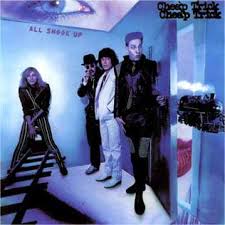
#337: All Shook Up (1980)
Artist: Cheap Trick
Epic Records
The brilliantly eccentric and vastly underrated All Shook Up is a slice of British Invasion-influnenced Midwestern power-pop that captures the dream-team collision of Cheap Trick and legendary producer George Martin. Having the architect of The Beatles' greatest studio triumphs (along with engineer Geoff Emerick) step in to manipulate the machinery for the band resulted in a massive structural shift. Martin pushed them entirely out of their standard stadium-rock comfort zone, engineering a dense, highly experimental grid that leaned heavily into orchestrated art-rock. The absolute staggering centerpiece of the record is "World's Greatest Lover," where frontman Robin Zander delivers an uncanny, chillingly accurate channeling of John Lennon's vocal cadence — a profoundly eerie and brilliant sonic mirroring considering it dropped right around the exact time Lennon was orchestrating his own highly publicized musical comeback. Beyond its creative triumphs, the album also serves as a crucial historical marker for the band's infrastructure: it stands as the final heavy foundation poured with original bassist Tom Petersson, who would subsequently exit the machinery and remain absent from the roster for seven years. It is a strange, glorious, and utterly essential chapter in their evolution.
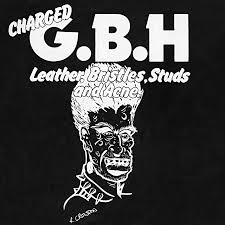
#338: Leather, Bristles, Studs and Acne (1981)
Artist: G.B.H.
Clay Records
Leather, Bristles, Studs and Acne is a blistering, high-velocity monument to the UK82 punk movement that captures G.B.H. effectively pouring the concrete foundation for the future of extreme music. The structural history of this release is notably modular: originally unleashed as a ferocious, razor-sharp EP, the grid was rapidly expanded with additional cuts to form the massively influential, widely circulated compilation Leather, Bristles, No Survivors and Sick Boys. In any configuration, it stands as a brilliant, deeply aggressive debut that completely rewired the punk rock framework. The band's incorporation of heavy, metallic guitar edges and a relentless, galloping rhythm section didn't just dominate the British underground—it fundamentally altered the trajectory of heavy metal across the Atlantic. It remains a permanently vital piece of studio machinery, famously championed by Metallica's James Hetfield, who openly identified G.B.H. as one of his all-time favorites and directly integrated their punishing velocity into the indestructible DNA of global thrash metal.

#339: Banco (1975)
Artist: Banco Del Mutuo Soccorso
Manticore Records
1975's Banco captures Italian titans Banco Del Mutuo Soccorso actively engineering a bridge to the global market. After successfully catching the attention of Emerson, Lake & Palmer, the band was brought directly onto ELP's own Manticore label. The structural strategy for this specific record was fascinating: rather than recording entirely new material, they meticulously re-engineered and translated the best tracks from their incredibly dense, operatic first three Italian albums into English. It was a calculated, brilliant attempt to crack open the American and international progressive rock grids. Despite the language shift, the band's foundational machinery remains flawlessly intact—driven by towering, classical keyboard runs, complex jazz-inflected time signatures, and fiercely virtuosic musicianship. It stands as a permanently vital, Manticore-stamped monument to Mediterranean progressive rock successfully translating its heavy, beautiful complexity across borders.
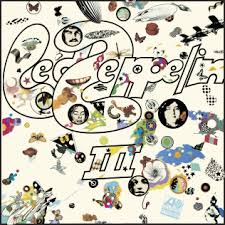
#340: Led Zeppelin III (1970)
Artist: Led Zeppelin
Atlantic Records
I should state here for the record that I had all of the albums in this list typed up in a LibreOffice document over several weeks of work long before I decided to immortalize it on this website — you'll realize why I mention it now in a few sentences. Led Zeppelin III captures the heaviest band on the planet fearlessly stepping away from their own established machinery. After saturating the global grid with the crushing, blues-rock artillery of their first two albums, Jimmy Page and Robert Plant retreated to a remote Welsh cottage to engineer a vastly more dynamic, acoustic, and folk-driven architecture. Despite this lush acoustic expansion, the record famously opens by violently tearing the door off its hinges with the relentless, galloping onslaught of "Immigrant Song." However, for this specific archive, the true historical gravity of Led Zeppelin III transcends its studio production; it serves as a permanent, deeply personal monument to the enduring bonds of friendship and musical brotherhood. This record holds the heavy, joyous memory of my late bandmate Mark Reimiller introducing "Immigrant Song" into an early rehearsal space, fundamentally shifting the sonic energy of the room. Most profoundly, it stands as the shared, undisputed favorite Led Zeppelin album of my lifelong friend and bandmate Bryan Morgan, who is in home hospice with a couple of weeks to live as I write this. It is vastly more than a piece of physical media — it is an immovable, emotional cornerstone of the entire collection.

#341: Only Theatre of Pain (1982)
Artist: Christian Death
Frontier Records
The undisputed, subterranean ground zero for American deathrock, 1982's Only Theatre of Pain completely rewired the architectural grid of the Los Angeles underground. Christian Death successfully engineered a terrifying and beautiful sonic blueprint by orchestrating a brilliant collision between two vastly different musical minds. Frontman Rozz Williams injected a deeply macabre, hyper-theatrical, and poetic vocal delivery into the machinery, heavily influenced by glam rock and avant-garde literature. This dark romanticism was suspended directly over the jagged, fiercely aggressive, and heavily chorus-drenched guitar framework constructed by Rikk Agnew, who had just exited the legendary Orange County punk outfit The Adolescents. This flawless integration of gothic atmosphere and blistering punk velocity created a towering, highly influential monument. It is a completely uncompromising piece of dark studio architecture that permanently defined an entire subculture.
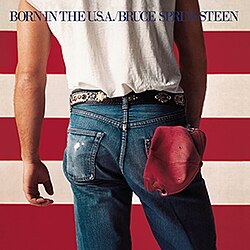
#342: Born in the U.S.A. (1984)
Artist: Bruce Springsteen
Columbia Records
A towering, inescapable juggernaut of 1980s studio architecture, 1984's Born in the U.S.A. captures Bruce Springsteen and the E Street Band engineering a massive, stadium-shaking sonic grid without diluting any of Springsteen's storytelling, pro-working-man lyrical power. The record masterfully updates Springsteen's working-class storytelling by threading bright, commanding synthesizer hooks directly into the band's traditional rock machinery, anchored heavily by co-producer Jon Landau giving Max Weinberg's snare drum an explosive, cannon-like texture. Beyond its staggering commercial footprint — generating a historic seven Top 10 singles — the album commanded profound respect across vastly different musical boundaries. In a legendary piece of cross-genre validation, Run-DMC's Jam Master Jay stated in a 1985 Rolling Stone interview that it was the only genuinely good album he had heard in years. Coming from one of the foundational architects of hip-hop — a visionary actively redefining the integration of heavy rock beats into rap — that endorsement stands as a massive testament to the album's undeniable groove, structural integrity, and universal power.
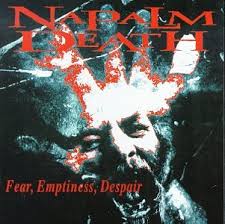
#343: Fear, Emptiness, Despair (1994)
Artist: Napalm Death
Earache / Columbia Records
Fear, Emptiness, Despair captures Napalm Death continuinhg to actively reconstruct their own sonic grid away from the hyper-speed blast beats of their pioneering grindcore roots, something they'd been doing since Harmony Corruption four years earlier. The band engineered a brutally heavy, mid-tempo groove heavily infected with dissonant, industrial-tinged guitar structures. Beyond its punishing musical evolution, the album stands as a profoundly surreal piece of corporate industry lore. It serves as the lone Napalm Death release spawned from the short-lived, highly unexpected partnership between independent extreme metal powerhouse Earache and major label monolith Columbia Records. The sheer absurdity of the exact same corporate machinery that housed Bruce Springsteen distributing a politically furious death metal record makes this a permanently vital piece of studio history. Furthermore, in a brilliant twist of industry irony, the Columbia deal temporarily placed frontman — and highly documented, massive Journey fan — Mark "Barney" Greenway on the exact same corporate roster as his arena-rock heroes.

#344: Power, Corruption & Lies (1983)
Artist: New Order
Factory Records
The exact moment that New Order successfully transcendsed the heavy, post-punk ashes of Joy Division came with the release of Power, Corruption & Lies in 1983. Along with its sister 12" single Blue Monday, the album engineered a flawless bridge into electronic dance music. The band completely rewired their studio machinery, heavily integrating complex synthesizer programming and early drum machines that effectively laid the concrete foundation for future movements in acid house, EBM, and modern electronic production. However, the true brilliance of the record lies in its structural balance; the cold, synthetic grid is perfectly anchored by Peter Hook's signature, high-register melodic basslines, ensuring the organic, human element remains fiercely intact. For any serious archivist of physical media, this release also stands as a towering monument of visual design. Factory Records' resident visionary Peter Saville constructed the iconic sleeve by colliding a classic Henri Fantin-Latour floral painting with a cryptic, color-coded alphabet block. This brilliant cipher system encrypted the album's title and credits, perfectly linking it to its companion release, the legendary "Blue Monday" 12-inch single — whose own die-cut, floppy-disk-mimicking sleeve notoriously hemorrhaged fifty pence from the label's, and the band's, finances for every single copy sold.
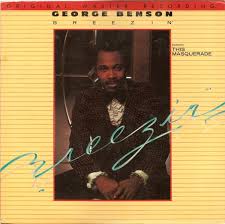
#345: Breezin' (1976)
Artist: George Benson
Warner Bros. Records
A key piece of lush, audiophile-grade studio brilliance, 1976's Breezin' represents a massive, triumphant pivot for guitar virtuoso George Benson. After years of frustrating creative gridlock with his previous label, CTI Records — where executives stubbornly suppressed his desire to incorporate his own vocals — Benson transitioned to Warner Bros. and immediately validated his instincts. By laying down his incredibly smooth, soulful voice on the Leon Russell cover "This Masquerade," he engineered a massive pop and R&B crossover hit, permanently proving his dual-threat capabilities. The instrumental title track is an indestructible earworm that dominated radio upon release, possessing a groove so structurally perfect that it was seamlessly hijacked decades later by the vaporwave movement, serving as the barely-altered foundational sample for a track on 식료품groceries' classic mallsoft album 슈퍼마켓Yes! We’re Open. Furthermore, Tommy LiPuma's pristine, impeccably balanced production elevates the entire record into a sonic benchmark; specifically, the Mobile Fidelity Sound Lab (MFSL) pressing (pictured here) remains a highly coveted, gold-standard test record for high-fidelity audio systems. It is a flawlessly executed piece of 1970s jazz-pop machinery.

#346: Love Gun (1977)
Artist: Kiss
Casablanca Records
A towering, explosive monument to 1970s stadium rock, 1977's Love Gun definitively marks the end of an era for the legendary New York shock-rockers. It stands as the final studio album to feature the band's original four members—Paul Stanley, Gene Simmons, Ace Frehley, and Peter Criss—operating completely together as a cohesive musical unit before the internal machinery was permanently fractured by their 1978 solo albums. With veteran producer Eddie Kramer returning to man the boards, the record captures the absolute zenith of the band's classic bombast. Structurally, it houses some of the most vital architecture in the band's history, including the galloping title track, which Stanley considers the quintessential Kiss anthem. Furthermore, the album delivers a massive evolutionary leap for guitarist Ace Frehley, who stepped up to the microphone to deliver his very first lead vocal on "Shock Me." Inspired by his own terrifying near-electrocution on stage in Florida, the track instantly became his signature masterpiece. Packed with a legendary, pop-gun cardboard insert, the record is a flawless, physical embodiment of the band at their absolute commercial and creative peak.

#347: Live at the Witch Trials (1979)
Artist: The Fall
Step-Forward Records
A contrarian cornerstone of Manchester post-punk, 1979's Live at the Witch Trials effectively laid the concrete foundation for the sprawling, unpredictable legacy of The Fall. In a flawless display of frontman Mark E. Smith's signature sneering irony, the debut was completely engineered as a studio album — recorded and mixed in a frantic two-day session — despite its inherently misleading title. Before the band's roster became a famously endless revolving door, this specific sonic grid was constructed on a profoundly unique interplay. The studio machinery relied heavily on the stark, fascinating contrast between Martin Bramah's jagged, scraping guitar work and Yvonne Pawlett's bouncy, deceptively cheerful electric piano. By suspending Smith's biting, working-class surrealism and rhythmic vocal delivery directly over this tense, highly mechanical rhythm section, the band successfully built an indestructible, anti-commercial framework. It is a raw, literate, and completely uncompromising piece of late-70s underground history.

#348: Frank Johnson's Favorites (1981)
Artist: Various Artists
Ralph Records
You want to talk gateways? This album was one that went directly into the American avant-garde. Frank Johnson's Favorites serves as a flawless map to the golden era of the Ralph Records machinery. Engineered by the Cryptic Corporation (i.e. The Residents when they weren't pretending to be anonymous) as a collection of non-album material from their artists, this compilation effectively weaponized the label's "Buy or Die" philosophy, exposing listeners to a deeply weird and uncompromising roster. The sonic grid perfectly balances the anonymous, unsettling art-rock of The Residents with the dissonant, mutated guitar work of Snakefinger, the early rhythmic pulse of Yello, and the heavy, atmospheric post-punk of Tuxedomoon. Beyond its historical importance to the underground scene, this specific record carries massive structural weight for this personal archive. It was acquired as part of an epic 1981 mail-order haul—arriving in the exact same package as foundational masterpieces by Tuxedomoon (Desire), MX-80 Sound (Crowd Control), and Fred Frith (Speechless). It stands as an early, crucial building block for a massive physical media library, officially inaugurating a lifelong dedication to uncompromising, boundary-pushing audio.

#349: Sandinista! (1980)
Artist: The Clash
CBS / Epic Records
This is not an album for the impatient or those wearing blinders. Sandinista! completely obliterated the traditional boundaries of a rock record. While purists and critics frequently argue the massive, 36-track triple-album should have been aggressively pruned down to a single or double LP (using the promo LP Sandinista! Now as a prime example), that reductionist view entirely misses the point. The sheer, overwhelming volume of the grid is the experience. Famously priced as a double LP (and occasionally acquired at regional retail legends like Boscov's for the price of a single album on release week, as is how I acquired my original vinyl copy), it served as a profound, highly accessible gateway into entirely new sonic territories. For many, it was a crucial, ground-level introduction to the echoing, bass-heavy chambers of dub reggae. The Clash fearlessly expanded their punk machinery to engineer an awe-inspiring genre hop, perfectly executing early hip-hop ("The Magnificent Seven," "Lightning Strikes (Not Once But Twice)"), Motown pop ("Hitsville U.K."), gospel ("The Sound of Sinners"), calypso ("Corner Soul"), and rockabilly ("The Leader"). The studio grid was so open that drummer Topper Headon took the lead vocal on the disco-infused "Ivan Meets G.I. Joe," and longtime Joe Strummer collaborator Tymon Dogg was given a massive platform to introduce his frantic violin work to the masses on "Lose This Skin." It remains a completely boundaryless, deeply immersive piece of physical media that actively demands exploration. And speaking of physical media: Around the time they were making this album, The Clash were working in New York, and the urban influences they absorbed led them all to purchase "ghetto blaster" radio/cassette players &mash; making Sandinista! a very special mixtape curated by The Only Band That Matters.

#350: The Red Hot Chili Peppers (1984)
Artist: Red Hot Chili Peppers
EMI America / Enigma
A chaotic, high-friction collision of Los Angeles punk and deep-groove funk, the 1984 self-titled debut of the Red Hot Chili Peppers captures a legendary band in a state of wild metamorphosis. Missing founding members Hillel Slovak and Jack Irons (who had signed their other band What Is This? to a major label deal), frontman Anthony Kiedis and bassist Flea relied on the formidable talents of guitarist Jack Sherman and former Weirdo and Captain Beefheart's Megic Band member (circa Ice Cream For Crow) Cliff Martinez to keep the rhythm section firing. The recording process itself is infamous for the intense creative tug-of-war between the young, fiercely stubborn band and producer Andy Gill of Gang of Four, who actively attempted to steer their feral, sweat-soaked live energy toward a cleaner, more synthetic radio sound. The resulting tension yielded a fascinating, rough-hewn milestone. Driven by Flea's hyper-aggressive slap bass and Kiedis's frantic, rhythmic vocal delivery on standout cuts like "True Men Don't Kill Coyotes" and "Get Up and Jump," the record lays out the raw, unbridled DNA of a sound that would eventually dominate the global rock landscape.