

Favorites: Albums — 301 to 325
Start writing your content here...
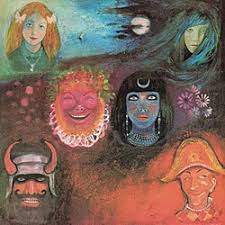
#301: In the Wake of Poseidon (1970)
Artist: King Crimson
Island / Atlantic
In the Wake of Poseidon captures King Crimson operating amidst profound structural collapse. With the original lineup actively fracturing during the recording process, guitarist Robert Fripp essentially willed this album into existence, taking on heavy keyboard duties to maintain the band's colossal symphonic weight. The towering title track stands as one of the absolute peaks of the early Crimson catalog, driven by Fripp’s deeply melancholic, sweeping Mellotron waves and perfectly anchored by Michael Giles's brilliantly nuanced, highly musical drumming that actively shapes the melody rather than just keeping time. On a deeply personal archival note, this specific record entered the grid as a 15th birthday present alongside 1982's Beat. It was a brilliant, completely accidental masterstroke by my mother, who unknowingly managed to purchase the exact "second" albums from two entirely distinct, legendary phases of the Crimson machinery. It is a massive, highly atmospheric document of a band refusing to fall apart.
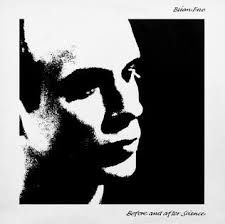
#302: Before and After Science (1977)
Artist: Brian Eno
Polydor / Island
We go from Robert Fripp to his frequent co-conspirator and inventor of the Frippertronics tape loop system, Brian Eno, for our next entry. Before and After Science captures Eno operating at the absolute peak of his eccentric powers, his head full of ideas already well embellished by his Oblique Strategies card deck by this time. While my initial exposure to this record's machinery came via the brilliant inclusion of the eerie, fretless-bass driven instrumental "Energy Fools The Magician" on the Rock 'N' Roll High School soundtrack, the true structural triumphs of the album are found in its vocal executions. It boasts two of my absolute favorite Eno vocal tracks: the buoyant, tightly wound "Backwater" and the hyper-kinetic "King's Lead Hat." The latter is a fiercely clever piece of lyrical and structural wordplay. Not only is the title a direct anagram of Talking Heads, but the song itself operates as a brilliant, high-velocity style parody and tribute to the manic, polyrhythmic energy of the very band Eno had already produced Fear of Music for. It is a wildly inventive, essential document from the undisputed godfather of treating the recording studio as the lead instrument.
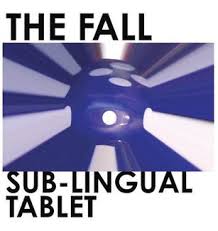
#303: Sub-Lingual Tablet (2015)
Artist: The Fall
Cherry Red Records
An absolute masterclass in unyielding, late-stage musical hostility, 2015's Sub-Lingual Tablet stands as the penultimate studio album in The Fall's terrifyingly sprawling catalog. Proving that his abrasive machinery remained utterly uncompromised right up to the very end, primary architect Mark E. Smith steers the band through a relentless, heavy, and deeply krautrock-infected sonic grid. This driving, rusted scaffolding provides the perfect foundation for MES's trademark snarling, highly cynical vocal delivery. The album's absolute structural triumph is the brilliant "Stout Men." Never one to simply play a standard tribute, Smith actively hijacks The Stooges' raw, legendary protopunk blueprint "Cock In My Pocket," completely dismantling and rewriting it to drag it kicking and screaming into his own bizarre, militant worldview. It is a fierce, uncompromising document of an artist and a band that absolutely refused to ever file down their sharp edges.
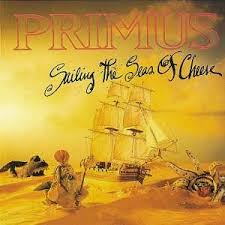
#304: Sailing the Seas of Cheese (1991)
Artist: Primus
Interscope / Atlantic
1991's Sailing the Seas of Cheese is the exact moment Primus successfully infiltrated the mainstream pop grid. The album's brilliantly self-aware title was primary architect Les Claypool's direct, cynical acknowledgment of the band jumping into the corporate machinery by signing with a major label. At the time, Interscope Records was still distributed by Atlantic and practically bankrolled by the success of Gerardo's massive one-hit wonder "Rico Suave." Yet, Primus's historical timing was absolutely flawless. Dropping directly into the transitional pocket where the bloated hair-metal industry was collapsing — and just months before Nirvana and the Red Hot Chili Peppers completely obliterated the cultural landscape — the band successfully weaponized the shifting climate. Driven by Claypool's monstrous, slapping bass grid, Larry LaLonde's deeply weird, dissonant guitar lines, and Tim Alexander's highly intricate polyrhythmic pocket, they dragged their bizarre, underground Bay Area freak-show directly onto MTV. It is a brilliant, structurally complex record that proved you could navigate the corporate seas of cheese without sacrificing a single drop of your fundamental strangeness.
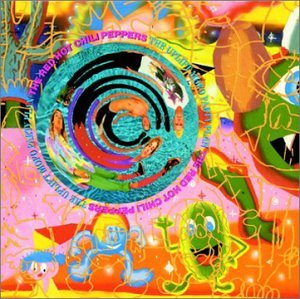
#305: The Uplift Mofo Party Plan (1987)
Artist: Red Hot Chili Peppers
EMI Manhattan
Hyper-kinetic punk-funk architecture captured in a less than 39-minute runtime, 1987's The Uplift Mofo Party Plan holds a monumental, untouchable status in the Red Hot Chili Peppers' sprawling timeline. After following the band's chaotic trajectory since their 1984 self-titled debut, this record serves as the holy grail of their early era: it is the singular studio album to feature the complete, original four-piece founding lineup locked onto the same grid. With drummer Jack Irons and guitarist Hillel Slovak fully reunited with Anthony Kiedis and Flea, the resulting machinery is a pure, unadulterated wrecking ball of energy. Irons's furious, deeply pocketed drum work aligns perfectly with Flea's blunt-force slap techniques, building an unstoppable rhythmic foundation for Slovak's brilliant, Hendrix-meets-hardcore guitar squalls. Tracks like the explosive "Fight Like a Brave" and the frantic "Me and My Friends" capture a band operating with weaponized adrenaline. It stands as a brilliant, ultimately tragic, and fiercely essential document of the original Los Angeles brotherhood firing on all cylinders before profound loss violently fractured the grid.

#306: John Lennon/Plastic Ono Band (1970)
Artist: John Lennon
Apple Records
John Lennon and Yoko Ono referred to their early experimental collabortions — Two Virgins, Life with the Lions, and The Wedding Album, and their warts-and-all impromptu live album of 50's rock covers Live Peace in Toronto — as audio diaries. The raw, unvarnished musical exorcism of 1970's John Lennon/Plastic Ono Band is not much different, outside of the fact that, not counting Live Peace... it was the most musical thing John had done outside the Beatles on a full-length album to date. JL/POB stands as the ultimate, violent dismantling of the Beatles mythos. Operating in the immediate aftermath of intense primal scream therapy, the "smart Beatle" engineered a stark, emotionally terrifying architecture that completely blindsided the general public. One can only imagine the sheer cultural shockwaves caused by a recently emancipated pop idol aggressively dropping multiple f-bombs over the bare acoustic framework of "Working Class Hero," or snarling about someone "standing there with your cock in your hand" against the rusted, blues-heavy trudge of "I Found Out." Despite the presence of Phil Spector in the co-producer's chair, the legendary Wall of Sound is entirely absent. Instead, Lennon relies on an incredibly sparse, exposed sonic grid, brilliantly anchored by Klaus Voormann's creeping bass and Ringo Starr's highly disciplined, heavy drum pocket. It is a brilliant, fiercely uncompromising structural middle finger to his own past and the definitive template for deeply confessional songwriting.

#307: The Downward Spiral (1994)
Artist: Nine Inch Nails
Nothing / Interscope
A defining monument of 1990s industrial dominance, 1994's The Downward Spiral captures Trent Reznor constructing a terrifyingly dense, highly abrasive sonic architecture. Blending suffocating synth sequences with blown-out guitars and deeply unsettling samples, the album is a violent exploration of self-destruction. Yet, its brilliance lies in its undeniable pop sensibilities. Dropping a track like "Closer" onto the PA system of a local rock club in 1995 was a guaranteed floor-filler; despite being a filthy, deeply misanthropic dirge, its swung, mechanized drum pocket (the drum sounds themselves sampled from Iggy Pop's "Nightclubbing") was engineered specifically to make a crowd grind. The record's cultural footprint remains massive, spanning from the hyper-frantic, odd-metered assault (5/8, anyone?) of "March of the Pigs" — which rightfully spawns an annual internet meme every time February 28th rolls around — to the devastating acoustic closure of "Hurt." The latter's songwriting foundation is so profoundly solid that Johnny Cash famously stripped it to the studs years later, transforming the track into his own final, heartbreaking epitaph — an outcome Reznor himself happily endorsed by stating, "It's not my song anymore."
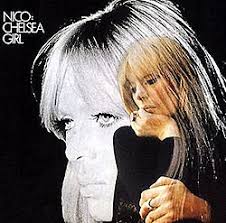
#308: Chelsea Girl (1967)
Artist: Nico
Verve Records
A brilliant, deeply atmospheric cornerstone of the 1960s underground, 1967's Chelsea Girl captures Nico stepping away from the feedback-drenched chaos of The Velvet Underground to establish her own haunting sonic territory. Rather than utilizing standard rock machinery, producer Tom Wilson engineered a completely drumless, baroque-folk grid constructed from fingerpicked acoustic guitars, sweeping cellos, and delicate woodwinds. While Nico famously hated the addition of the flutes, the fragile instrumentation provides a fascinating structural contrast to her iconic, icy, and heavily Germanic vocal delivery. She uses that unshakeable baritone to anchor an incredible roster of contributed songwriting, interpreting blueprints from Lou Reed, John Cale, Bob Dylan, and a teenage Jackson Browne, who provided the devastatingly beautiful "These Days." It remains a gorgeous, melancholic, and enduring piece of gothic-folk architecture, proving that profound sonic weight can be achieved without a rhythm section.
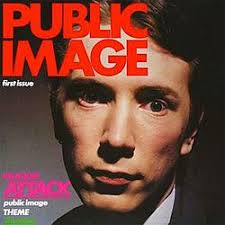
#309: First Issue (1978)
Artist: Public Image Ltd.
Virgin Records
A monumental, ground-zero document for the entire post-punk movement, Public Image Ltd.'s 1978 debut First Issue captures John Lydon actively burning down the remnants of his punk rock past. Rather than repeating the hyper-kinetic, three-chord fury of the Sex Pistols, Lydon engineered a completely alien, deeply hostile sonic grid. On a deeply personal archival note, this specific album holds massive historical weight: it was the very first import record I ever purchased in my life. Dropping a hefty $12.98 in 1981 dollars on my 14th birthday, it was worth every single penny because it officially introduced me to my very first bass hero, Jah Wobble. His canyon-deep, dub-reggae-infected basslines serve as the relentless engine of the record, providing a heavy, hypnotic contrast to Keith Levene's jagged, metallic guitar scraping. It completely rewired my understanding of the instrument's capabilities. In a fitting, full-circle moment, as I sit here coding this exact entry into the database, Wobble's massive Redux box set is actively providing the soundtrack. It is a brilliant, uncompromising anti-rock record that fundamentally shaped my own musical DNA.
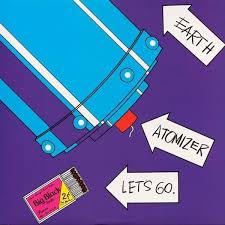
#310: Atomizer (1986)
Artist: Big Black
Homestead Records
A defining, fiercely uncompromising triumph of 1980s noise-rock architecture, 1986's Atomizer serves as the first major achievement from legendary recording purist Steve Albini. Completely discarding standard punk rock machinery, Albini and his co-conspirators utilized a Roland TR-606 drum machine—famously credited simply as "Roland"—to build a cold, rigid, and profoundly punishing rhythmic grid. This mechanized foundation provided the perfect backdrop for heavy, abrasive guitar textures that actively sound like scraping sheet metal. Furthermore, the album perfectly encapsulates Albini's incredibly dark, deeply cynical sense of humor. Often branded as an intentional edgelord by the contemporary press, his lyrical approach was actually a razor-sharp, almost journalistic exploration of the absolute ugliest, most taboo corners of Middle American culture, frequently mistaken for sincere malice. It is a massive, hostile, and utterly essential document of underground musical engineering.
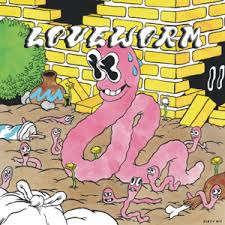
#311: Loveworm (2019)
Artist: beabadoobee
Dirty Hit
A brilliant, highly textured resurrection of 1990s alternative rock architecture, 2019's Loveworm captures Bea Kristi completely reverse-engineering the heavy shoegaze and slacker-rock machinery of the past. Operating under the beabadoobee moniker, she builds a deeply nostalgic sonic grid relying entirely on heavily distorted guitars, massive pedalboard fuzz, and thick, driving basslines. However, the true structural triumph of the record lies in its core contrasts. That heavy, blown-out instrumentation acts as a warm, soft-focus foundation for her incredibly sweet, delicate, and often whispered vocal delivery. Tracks like "Disappear", "Apple Cider" and "Soren" reveal a profound understanding of timeless pop-rock scaffolding; she essentially takes flawless, highly melodic frameworks and deliberately buries them under heavy layers of chorus and feedback. It is a beautifully constructed, fiercely independent record that proves the classic guitar-pop blueprint remains totally indestructible for a new generation.

#312: Mizutamari ni Utsuru Sekai (2000)
Artist: Yui Horie
Starchild/King Records
A flawless piece of pristine, hyper-melodic J-pop architecture, Yui Horie's 2000 debut, Mizutamari ni Utsuru Sekai, captures the exact moment the legendary voice actress translated her undeniable talent into mainstream musical dominance. Already securing a permanent place in the cultural grid as the iconic voice of Naru Narusegawa from Love Hina, Horie utilizes this album to showcase a different kind of power. Rather than relying on heavy, driving rock machinery, the entire structural scaffolding of this record is engineered to support the pure, crystal-clear, and undeniably angelic tone of her vocal delivery. Backed by a brilliant mix of lush string arrangements, tight, upbeat percussion, and bright, highly polished synthesizer sequences, she completely commands the sonic landscape. It is a sugary, meticulously crafted document that proves top-tier seiyuu talent can execute brilliant, bulletproof pop frameworks with absolute precision.
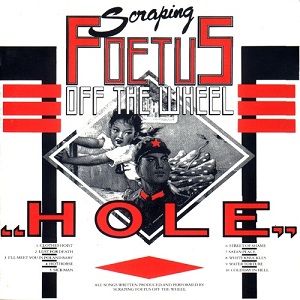
#313: Hole (1984)
Artist: Scraping Foetus Off The Wheel
Self Immolation / Some
Bizzare
A terrifyingly dense, theatrical collision of big-band swing and rusted industrial machinery, 1984's Hole captures J.G. Thirlwell operating at the absolute peak of his manic, avant-garde powers. Releasing the album under the abrasive Scraping Foetus Off The Wheel moniker, Thirlwell acts as a mad conductor, engineering a highly chaotic, cinematic sonic grid that violently smashes orchestral brass against punishing, metallic percussion. The lore surrounding this record is deeply tied to the realities of pre-internet music hunting. Encountering an enthusiastic review in the foundational days of Spin magazine—likely penned by underground champions like Byron Coley or Andrea 'Enthal—was enough to cement its mythical status. However, the true testament to a dedicated physical media archive is the decade-long wait to actually experience the audio, finally marching into The Wall ten years later to explicitly special-order the CD. It is a wildly ambitious, fiercely independent piece of structural noise that was absolutely worth the ten-year wait.
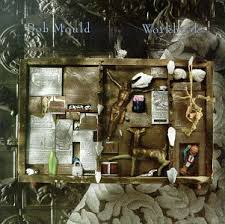
#314: Workbook (1989)
Artist: Bob Mould
Virgin Records
A stunning, deeply introspective triumph of post-punk reconstruction, 1989's Workbook captures Bob Mould completely dismantling his past in the wake of Hüsker Dü's exhausted collapse. Rather than relying on the deafening, buzzsaw-guitar machinery that made him a foundational legend of the American underground, Mould retreated and built an entirely new sonic scaffolding. Driven by intricate, fingerpicked acoustic guitars and the sweeping, melancholic cello arrangements of Jane Scarpantoni, the album operates with a quiet, devastating emotional gravity. In a brilliant piece of rhythmic architecture, Mould anchored this highly melodic, stripped-down grid with the veteran rhythm section of Pere Ubu—drummer Anton Fier and bassist Tony Maimone. Tracks like the brilliantly optimistic "See a Little Light" and the brooding "Wishing Well" demonstrate that true structural power doesn't always require a wall of distorted amplifiers. It is a vital, gorgeous document of an artist successfully navigating a profoundly vulnerable creative rebirth.
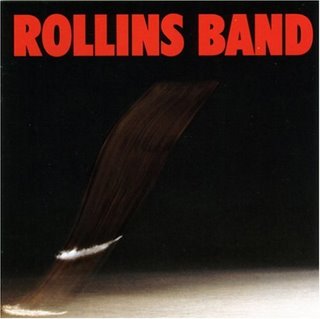
#315: Weight (1994)
Artist: Rollins Band
Imago Records
1994's Weight abandons standard alternative rock tropes in favor of a suffocating, jazz-infused metal assault. By recruiting avant-garde bass virtuoso Melvin Gibbs, the band fundamentally rewired its rhythmic core. Gibbs and jazz-trained drummer Sim Cain construct an impossibly tight, heavily funk-damaged foundation, swinging with terrifying weight. This allows guitarist Chris Haskett to unleash waves of angular, dissonant noise. At the epicenter of the storm is Henry Rollins, delivering a career-defining vocal performance fueled by isolation, rage, and a relentless blue-collar work ethic. The breakout success of the spoken-word-meets-metal explosion "Liar" dragged their uncompromising intensity onto MTV, but the true muscle of the record lies in the punishing, slow-burn grooves of tracks like "Disconnect", "Divine Object of Hatred" and "Volume 4" It stands as a towering, fiercely intelligent monument of 1990s heavy music.
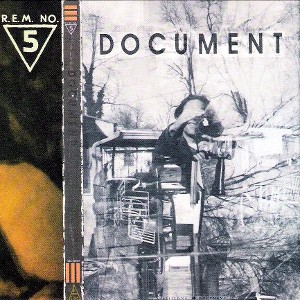
#316: Document (1987)
Artist: R.E.M.
I.R.S. Records
A massive, transitional monolith in the Southern college rock timeline, 1987's Document serves as the definitive coda to R.E.M.'s legendary independent era on I.R.S. Records. Preparing to jump to the major-label machinery of Warner Bros., the band brought in producer Scott Litt to completely re-engineer their sonic architecture. He stripped away the trademark jangle and atmospheric murk, replacing it with a punchy, muscular, and intensely political rock grid. The searing clarity of tracks like "Finest Worksong" and "The One I Love" proved the band was fully equipped for stadium deployment. Yet, the true historical weight of this record is deeply tied to its specific time and location. It is inextricably linked to the visceral memory of walking through Atlanta's Little Five Points with my then-girlfriend, Teresa (now a published author, mental health specialist, and enduring friend), and seeing the record shop posters hyping the impending release right in the band's geographic backyard. Furthermore, it marks a pivotal technological shift within this archive: after faithfully collecting their entire prior catalog on vinyl — with a brief cassette detour for Dead Letter Office — this masterpiece officially inaugurated the CD era of the R.E.M. collection.
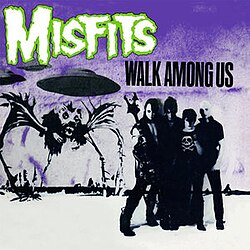
#317: Walk Among Us (1982)
Artist: Misfits
Ruby / Slash
Walk Among Us perfectly executes a brilliantly twisted sonic blueprint of melodic horror-punk infrastructure. Glenn Danzig effectively hijacked the hyper-melodic, 1950s doo-wop and rockabilly scaffolding, fed it through a buzzsaw of relentless punk downpicking, and completely smothered the results in late-night B-movie gore. My own introduction to this record required some serious underground maneuvering; it had been out of print for a couple of years when I first heard it, forcing me to borrow a bandmate's copy just to run off a cassette tape copy. Fortunately, the drought didn't last long. Several months later, Slash/Warner finally issued the very first CD edition, which my then-girlfriend Teresa generously secured for me as a Christmas gift. Ironically, while the physical album has remained virtually ubiquitous ever since, its recent, abrupt disappearance from Apple Music serves as a stark reminder of the volatile nature of the streaming grid. Whether it is the result of the band leveraging the 35-year copyright rule to aggressively wrestle the master tapes back from Warner Music Group or just a temporary licensing glitch, it proves exactly why maintaining a hard physical archive is absolutely vital.
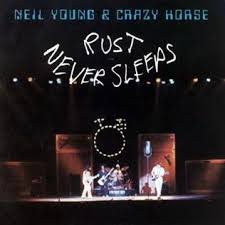
#318: Rust Never Sleeps (1979)
Artist: Neil Young & Crazy Horse
Reprise Records
This is ground zero for why Uncle Neil became known as the Godfather of Grunge. 1979's Rust Never Sleeps captures Neil Young staring directly into the face of his own potential obsolescence and actively choosing to crank the amplifiers. While the rest of the 1970s rock establishment was terrified by the incoming punk rock wave, Young explicitly embraced the raw energy of the movement, acknowledging the cultural shift by name-dropping Johnny Rotten. (He'd also get Devo to make a prominent appearance in his movie Human Highway, including a closing scene where he and the band did an early version of "Hey Hey My My" while Neil worse a Sex Pistols Never Mind The Bollocks shirt.)The structural execution of this record is a brilliant piece of studio trickery: primarily recorded live on tour, the tracks were heavily overdubbed and manipulated to masquerade as a proper studio album. By splitting the grid directly in half—opening with an intimate, stripped-down acoustic set before handing the machinery over to the lumbering, hyper-distorted rhythm section of Crazy Horse for the B-side—he built a perfectly balanced sonic ecosystem. The sheer, ear-splitting weight of his Les Paul tearing through "Hey Hey, My My (Into the Black)" proved that rather than fading away, he was more than capable of matching the aggression of the new underground pound for pound.
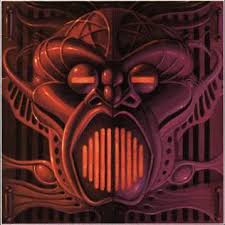
#319: Beyond The Gates (1986)
Artist: Possessed
Combat Records
While the standard, rigid critical consensus almost exclusively points to their debut, Seven Churches, as the definitive landmark of the genre, Possessed's sophomore effort, 1986's Beyond the Gates, sees them actively refining their terrifying, high-velocity machinery. Here the band operates on a much more compelling structural grid, expanding the scope with longer tracks like "No Will To Live" and tightening the aggression of their sound. However, the true historical fascination of this record lies in its lead guitar architecture. It features a teenage Larry LaLonde aggressively executing a blistering, dive-bombing thrash style heavily indebted to the blueprints of Kirk Hammett and Kerry King. The fact that this exact same Bay Area thrash kid would eventually completely dismantle his entire six-string approach, re-emerging years later as a bizarre, dissonant mutation of Snakefinger and Alex Lifeson to anchor the avant-garde funk-metal of Primus, remains one of the most incredible, unpredictable sonic evolutions in rock history. It is a vital, bruising document of a genre and a legendary guitarist in transition.
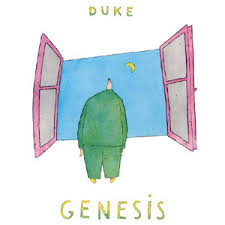
#320: Duke (1980)
Artist: Genesis
Charisma / Atlantic
Although no one realized it at tthe time — not even the members of the band — 1980's Duke served as the exact structural pivot point where Genesis actively bridged the gap between two entirely different sonic worlds. The band expertly navigates the line between the sprawling, highly complex progressive rock architecture of their 1970s past and the streamlined, radio-ready pop machinery that would dictate their massive commercial future. While the musical execution is razor-sharp, the emotional weight of the record is heavily anchored by the real-life dissolution of drummer and vocalist Phil Collins's marriage. Channeling that profound personal devastation directly into the studio console yielded a deeply vulnerable lyrical framework. Not only did this heartbreak dictate the direction of standout tracks like "Misunderstanding" and "Please Don't Ask," but it effectively established the emotional and structural blueprint for Collins's solo debut, Face Value, which would hit the market just months later. It remains a fascinating snapshot of a legendary band successfully rewiring its own DNA.
#321: The Faust Tapes (1973)
Artist: Faust
Virgin Records
A towering, utterly chaotic achievement in early studio manipulation, 1973's The Faust Tapes serves as a definitive cornerstone of the German Krautrock movement. Operating entirely outside the boundaries of traditional song structure, the band constructed this album by physically hacking up dozens of hours of private studio jams, ambient noise, and bizarre acoustic fragments, aggressively stitching them together into a disorienting, rapid-fire sonic collage. Recognizing the terrifying amount of destructive, physical razor-blade tape splicing required to engineer a grid this erratic in a pre-digital era gives the record a profound, heavy weight. Beyond its musical audacity, the album holds a legendary status in physical media history. Virgin Records brilliantly released the full-length LP for a mere 48 pence—the exact cost of a standard 7-inch single at the time. This subversive pricing strategy effectively tricked over 100,000 British consumers into bringing a wildly experimental, highly abrasive piece of avant-garde art directly into their homes. It is a vital, unapologetic monument to the power of DIY engineering and guerrilla marketing.
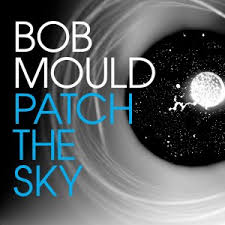
#322: Patch The Sky (2016)
Artist: Bob Mould
Merge Records
Patch The Sky stands in stark, deafening contrast to the acoustic vulnerability of Workbook. Emerging from a period of profound personal loss and isolation, Bob Mould actively chose not to retreat, instead channeling his grief directly into his amplifiers. The result is a massively dense, driving record that successfully resurrects the relentless buzzsaw-guitar machinery of his Hüsker Dü and Sugar eras. From an engineering standpoint, managing a sonic grid with this much heavily layered, overdubbed distortion without sacrificing clarity requires immense discipline. Mould pulls it off perfectly, anchoring his massive wall of fuzz with the bulletproof rhythm section of bassist Jason Narducy and drummer Jon Wurster. Together, this power trio builds an impenetrable, aggressive foundation that still manages to completely highlight Mould's enduring, razor-sharp ear for brilliant pop melodies. It is a vital, emotionally bruising, and incredibly loud testament to his enduring strength as a songwriter.
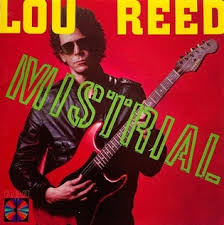
#323: Mistrial (1986)
Artist: Lou Reed
RCA Records
A fiercely catchy, highly polished, and criminally underrated chapter in a legendary discography, 1986's Mistrial captures Lou Reed actively experimenting with the slick studio machinery of the mid-1980s. Routinely and unfairly bypassed by critics rushing toward the stripped-down grit of his later work, this record holds massive personal historical weight: excluding the feedback-heavy origins of The Velvet Underground's White Light/White Heat, this was the very first solo Lou Reed album to enter my archive. Co-produced with phenomenal bassist Fernando Saunders, the sonic architecture relies heavily on tight drum programming, synthesizers, and pristine pop-rock production. This highly sanitized grid provides a bizarre, utterly fascinating contrast to Reed's trademark, deadpan New York cynicism. On tracks like "No Money Down" and "Video Violence," he proves that you can completely adopt the decade's commercial infrastructure without dulling a single edge of your lyrical bite, while not being afraid to throw in some humor in "The Original Wrapper" and the should-have-been-a-single closing ballad "Tell It To Your Heart". Defying the standard critical consensus, it remains a brilliant, tightly constructed, and completely unskippable record from start to finish.
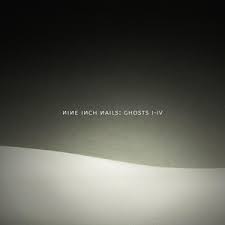
#324: Ghosts I-IV (2008)
Artist: Nine Inch Nails
The Null Corporation
A massive, sprawling monument to newly secured artistic freedom, 2008's Ghosts I-IV captures Trent Reznor operating completely unchained from the major-label machinery. After definitively walking away from Interscope Records the previous year (That separation would last a decade; Interscope welcomed him back with open arms in time for the Not The Actual Events EP, licensing his new material from his Null Corporation label under a better record deal ever since). Reznor became structurally unstoppable. Instead of playing it safe to establish his newly independent footprint, he boldly unleashed a staggering 36-track double album of purely instrumental compositions. Navigating this dense, highly atmospheric sonic grid reveals a profound, deeply recognizable lineage of avant-garde influences; the mechanical, ambient architecture of Brian Eno and the bizarre, experimental post-punk textures of Tuxedomoon are visibly woven right into the DNA of these tracks. What makes this specific era truly legendary, however, is the sheer, unapologetic momentum behind it. Reznor didn't just casually release an instrumental opus; he fundamentally shattered the traditional industry release model by immediately turning around and dropping a fully realized, vocal-driven Nine Inch Nails studio album, The Slip, entirely for free just weeks later. It is a brilliant, highly textured achievement from an artist in absolute command of his own transmission.
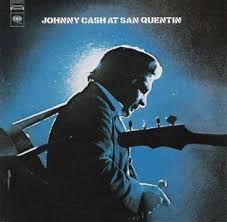
#325: At San Quentin (1969)
Artist: Johnny Cash
Columbia Records
A towering, genuinely dangerous monument of live recording architecture, 1969's At San Quentin captures Johnny Cash operating inside a highly volatile, maximum-security pressure cooker. Completely stripping away the sanitized, commercial gloss of the standard Nashville machinery, Cash feeds directly off the furious, anti-authoritarian energy of the captive audience. The legendary, enduring image of Cash aggressively flipping the bird — captured by photographer Jim Marshall—was not a calculated, theatrical pose. It was a completely authentic, highly targeted moment of hostility directed at the Granada TV documentary crew, whose cameras were persistently invading his stage space and actively blocking his connection with the inmates. That single gesture perfectly encapsulates the raw, unyielding defiance of the entire performance. Driven by the relentless, freight-train rhythm of the Tennessee Three, Cash completely commands the room, delivering a setlist that practically incites a riot. It is a vital, historically massive record, and the ultimate, heavy closer for the thirteenth page of this archive.