

Favorites: Albums — 376 to 400
What would Mort Garson do?
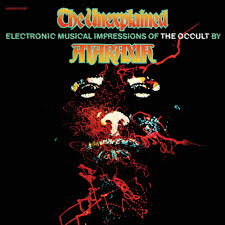
#376: The Unexplained: Electronic Musical Impressions of the Occult (1975)
Artist: Ataraxia (Mort Garson)
RCA Victor
An eerie excursion into the possibilities of the Moog synthesizer, 1975's The Unexplained captures electronic pioneer Mort Garson operating under the mysterious pseudonym Ataraxia. (And this wasn't his first time doing so under an assumed band name: he did an album called Black Mass under the project name Lucifer for UNI a few years earlier.) Long before it became standard practice for electronic musicians to utilize a variety of monikers to separate their distinct sonic experiments, Garson adopted this specific alter ego to fully immerse himself in a conceptual underworld of tarot, astral projection, and the supernatural. Eschewing the novelty of using synthesizers to simply replicate traditional pop arrangements, he pushed his massive modular hardware to generate swooping oscillators, bubbling rhythmic sequences, and heavy, unsettling drones. The resulting soundscape is a deeply atmospheric, retro-futuristic séance that masterfully bridges the gap between early electronic academia and cinematic, late-night cult horror aesthetics. It is a vital, hypnotic artifact for any serious collector of vintage synthesizer history.
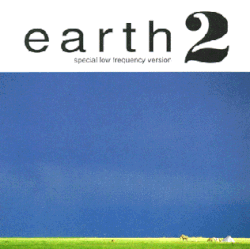
#377: Earth 2: Special Low Frequency Edition (1993)
Artist: Earth
Sub Pop
Earth 2: Special Low Frequency Edition is the undisputed ground zero for the drone metal genre. Masterminded by Dylan Carlson, the record completely discards traditional song structures, vocals, and standard rhythms in favor of a monolithic, 73-minute crawl of heavily down-tuned, glacially slow guitar feedback. Adding to the album's legendary status is Sub Pop's brilliant, deeply deceptive packaging: cloaking this suffocating wall of noise in a serene, sky-blue nature aesthetic that led countless unsuspecting consumers to mistakenly purchase what they assumed was a peaceful, Yanni-esque New Age record. The sheer, physical gravity of the music left a permanent crater in the underground scene, most notably birthing the aesthetic and sonic foundation of Sunn O)))—who famously named themselves as a tribute to the amplifiers used, while deeply honoring the cosmic logic that their "Sunn" strictly revolved around "Earth." It is an uncompromising, full-body physical endurance test pressed directly to CD (and later to vinyl).
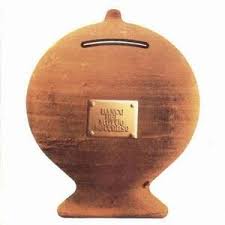
#378: Banco Del Mutuo Soccorso (1972)
Artist: Banco Del Mutuo Soccorso
Dischi Ricordi
Banco Del Mutuo Soccorso's 1972 self-titled debut is a crucial foundational masterpiece of the 1970s Rock Progressivo Italiano movement. It is important to distinguish this original, Italian-language recording from the band's later 1975 English-language compilation that appeared earlier in this list, as this debut captures their symphonic ambitions in their purest, most uncompromised form. Driven by the dazzling, classical-infused dual keyboard interplay of brothers Vittorio and Gianni Nocenzi, the music seamlessly weaves between aggressive hard rock and delicate, romantic piano interludes. The undisputed soul of the album, however, is the late frontman Francesco Di Giacomo, whose soaring, operatic tenor provides a level of emotional depth and dramatic grandeur rarely achieved by their British progressive contemporaries. For serious vinyl archivists, the album is equally legendary for its brilliant physical presentation, originally housed in an inventive die-cut sleeve shaped entirely like a traditional Italian piggy bank. It is a stunning, deeply romantic milestone of European progressive rock.

#379: Children of the World (1979)
Artist: Stan Getz
Columbia Records
Children of the World captures legendary saxophonist Stan Getz teaming up with composer Lalo Schifrin to commemorate the International Year of the Child. Stepping away from pure jazz traditionalism, Getz masterfully layered his signature cool-toned tenor over a crossover fusion backdrop of lush string arrangements, synthesizers, and contemporary pop grooves (including two tracks with Stanley Clarke on bass). However, the most instantly iconic element of the release is its brilliant cover art, exclusively illustrated by Charles M. Schulz and featuring Peanuts icons Snoopy, Woodstock and Schroeder deep in a musical trance. For this specific physical media archive, the album holds the profound, foundational distinction of being the very first jazz record I ever purchased. The catalyst for that milestone is a flawless snapshot of pre-internet discovery: my curiosity was initially sparked by spotting a Columbia Records advertisement showcasing Schulz's artwork while flipping through a copy of Down Beat magazine in a junior high school library. It is a stunning example of how a beloved, familiar aesthetic can act as the ultimate, welcoming gateway into an entirely new sonic universe.

#380: Beauty & Ruin (2014)
Artist: Bob Mould
Merge Records
Beauty & Ruin sees alternative rock godfather Bob Mould processing profound personal loss with this deeply reflective and furiously energetic late-career triumph of an album. Written in the direct aftermath of his father's passing, the record serves as a heavy, emotionally raw meditation on aging, legacy, and mortality. However, rather than retreating into quiet, acoustic grief, Mould tackles these heavy themes with the same blistering, buzzsaw guitar tone and relentless forward momentum that originally defined his legendary work with Hüsker Dü and Sugar. Anchored by the incredibly tight, powerhouse rhythm section of bassist Jason Narducy and drummer Jon Wurster, tracks like the explosive "I Don't Know You Anymore" roar with a renewed, vital urgency. It is a stunning, 36-minute blast of melodic hardcore brilliance, proving definitively that a veteran songwriter can channel deep existential reflection into some of the most powerful, aggressive rock and roll of his entire career.

#381: Sky (2003)
Artist: Yui Horie
King Amusement Creative / StarChild
Sky, the third proper solo album by legendary voice actress and singer Yui Horie, captures her at the absolute peak of her early musical output. Possessing an unmistakably sweet, angelic vocal tone, Horie elevates the record far beyond standard anime tie-in fare, anchoring it with genuinely airtight, meticulously crafted pop production. Featuring wildly infectious, high-energy singles like "All My Love" and "Kirari Takaramono" and key deep cuts like "Romantic Flight" and "eyes memorize", the album is a masterclass in early 2000s J-Pop engineering. For a dedicated archivist, it serves as a flawless, uplifting counterbalance to the heavy punk, industrial, and dub sounds found elsewhere in the collection, proving definitively that a perfectly constructed, relentlessly optimistic pop melody holds just as much weight and structural integrity on the grid.

#382: Madvillainy (2004)
Artist: Madvillain (MF DOOM & Madlib)
Stones Throw Records
Madvillainy is a towering masterpiece of unorthodox sonic architecture. A collaboration between visionary producer Madlib and the late, legendary wordsmith MF DOOM, the album completely dismantled traditional rap song structures, discarding standard pop choruses in favor of brief, densely packed, two-minute vignettes of pure audio brilliance. What makes the record a true marvel of production is that Madlib crafted the bulk of these incredibly dusty, obscure, and jazzy instrumentals in a Brazilian hotel room using only a portable Boss SP-303 sampler and a cassette deck. When layered with DOOM's labyrinthine, free-associative, and fiercely clever rhyme schemes across tracks like "Accordion," "Meat Grinder," and "All Caps," the result is a singular, deeply atmospheric universe. Released on the fiercely independent Stones Throw imprint, it remains an essential, untouchable cornerstone for any serious music collector.

#383: One Nation Under A Groove (1978)
Artist: Funkadelic
Warner Bros. Records
One Nation Under A Groove captures George Clinton's sprawling Parliament-Funkadelic collective (recording here as the harder-edged Funkadelic, since the smoother Parliament was contracted to Casablanca) operating at the absolute peak of their creative and commercial powers. The album is a flawless, boundary-obliterating collision of psychedelic rock, R&B, and unadulterated, heavy funk. Driven by the mind-bending synthesizer wizardry of Bernie Worrell and the blistering, acid-drenched guitar heroics of Michael Hampton—particularly on the legendary live cut of "Maggot Brain" heard on the bonus 7" — the record proves that heavy guitar music and deep, danceable grooves are not mutually exclusive. The title track remains one of the most culturally vital and infectious anthems ever committed to tape, and one that has been sampled and/or interpolated extensively during hip hop's golden Yo! MTV Raps era. In an era where streaming availability is constantly jeopardized by fleeting corporate licensing agreements, having this monumental, groove-heavy masterpiece secured as a physical artifact is an absolute necessity for any serious archivist.

#384: One Night With Blue Note Preserved (1985)
Artist: Various Artists
Blue Note Records / EMI Manhattan
The staggering 4LP/cassette/CD historical document One Night With Blue Note Preserved captures the monumental February 1985 concert at New York City's Town Hall that officially celebrated the relaunch and resurrection of the iconic jazz imprint. Organized by executives Bruce Lundvall and Michael Cuscuna, the event served as a legendary, once-in-a-lifetime reunion of the label's foundational architects. Featuring heavyweights like Art Blakey, Herbie Hancock, Freddie Hubbard, Jimmy Smith, and Kenny Burrell sharing the stage, the recordings are a flawless masterclass in hard bop and soul-jazz improvisation. For this dedicated collector, the album also carries profound personal weight: initially acquired in 1985 on cassette through a highly fortunate Capitol-EMI wholesale connection, it served as an essential, affordable gateway into the sprawling architecture of jazz. It stands as absolute proof that the most foundational cornerstones of a massive record collection often begin their life as heavily loved, budget-friendly magnetic tape.

#385: A Different Kind of Truth (2012)
Artist: Van Halen
Interscope Records
In the only timeline that matters to true rock purists, there are exactly seven Van Halen studio albums, and they all exclusively feature the undisputed, ultimate rock star, Diamond David Lee Roth, commanding the microphone. 2012's A Different Kind of Truth serves as the monumental, fiercely overdue final chapter to that legendary run. Wisely pulling foundational DNA from legendary, unreleased 1970s demo tapes, the record completely bypasses the sterile, keyboard-heavy detours of the band's middle eras and plugs straight back into the raw, high-voltage grid of their origins. Eddie Van Halen's fretboard work is astonishingly aggressive and acrobatic, Alex's swing is as massive as ever, Wolfgang Van Halen kicks off his own recording career by filling in the bass slot very nicely for his father and uncle (and leading Roth to pun, "Van Halen — now with 25% more Van Halen!"), and Diamond Dave delivers his signature vaudeville-meets-karate-kick swagger with absolute, undeniable authority. For the dedicated archivist who rightfully refuses to acknowledge any alternative vocal timelines, this album is a spectacular, triumphant return to form.

#386: The Radha Krsna Temple (1971)
Artist: Radha Krsna Temple
Apple Records
Far beyond a mere artifact of the 1960s and 70s counterculture, 1971's The Radha Krsna Temple is a stunning, deeply hypnotic piece of sonic architecture. Produced and heavily guided by George Harrison—who also contributed guitars, bass, and meticulous acoustic arrangements — the record beautifully merges ancient Sanskrit mantras with the lush, high-fidelity studio engineering of the Apple Records era. The result is an incredibly meditative, transportive listening experience that easily transcends its era. For me, it operates as a crucial, frequent late-night spin, providing such a profound atmospheric resonance that it directly inspired a modern, homegrown cover of the epic track "Govinda" under my Toy Piano recording alias. It stands as absolute proof that deeply spiritual, acoustic vibrations can continue to spark new creative machinery decades after they were committed to tape.

#387: Katy Lied (1975)
Artist: Steely Dan
ABC Records
A supreme triumph of studio perfectionism, 1975's Katy Lied captures Steely Dan's definitive transition from a traditional touring rock group into an uncompromising, studio-bound duo. Donald Fagen and Walter Becker enlisted a staggering roster of elite session players to execute their deeply cynical, meticulously arranged jazz-rock architecture. Yet, beneath the pristine audio polish lies a foundational compositional brilliance that translates effortlessly across completely disparate genres. The ultimate proof of this structural integrity is the album's centerpiece, "Doctor Wu." The track possesses such an undeniable melodic skeleton that it was famously stripped down and covered by the Minutemen on their sprawling underground masterpiece, Double Nickels on the Dime. Hearing those lush, immaculate Steely Dan chord changes radically reinterpreted through a frantic, DIY punk filter — driven by the fiercely kinetic, rubbery basslines and lead vocal of Mike Watt — demonstrates exactly how bulletproof Fagen and Becker's songwriting truly is. It is an essential, meticulously engineered cornerstone for any serious record or CD collection.

#388: Haunted (1995)
Artist: Six Feet Under
Metal Blade Records
Haunted is a foundational pillar of groove-heavy death metal. Originally formed as a side project before vocalist Chris Barnes officially exited Cannibal Corpse, Six Feet Under made the deliberate, brilliant choice to strip away the hyper-technical, blistering speed that dominated the genre at the time. Instead, they built a towering sonic architecture out of massive, lumbering, primal grooves, anchored by the swampy, heavily distorted riffing of Obituary's Allen West and the crushing rhythm section of Terry Butler and Greg Gall. This spacious, stripped-down approach gave Barnes the perfect sonic runway to push his signature, subterranean vocal delivery to the absolute forefront. An essential, punishing inclusion for any extreme music archive, the record stands as absolute proof that dropping the BPM can exponentially increase the sheer, crushing weight of a track.

#389: Eaten Back To Life (1990)
Artist: Cannibal Corpse
Metal Blade Records
We go from the album where Chris Barnes made his pivot as a death-groove frontman to the album where hie professional career began. Eaten Back To Life marks the explosive debut of Cannibal Corpse and serves as ground zero for the modern brutal death metal movement. Recorded at the legendary Morrisound Recording studio in Tampa with producer Scott Burns, the album beautifully captures a band still fiercely bridging the gap between frantic, high-speed thrash and unapologetic death metal. Driven by the razor-sharp riffing of Jack Owen and Bob Rusay, and anchored by Alex Webster's unmistakable, clanking bass lines, the musical architecture is remarkably chaotic and unhinged. However, the true historical weight of the record lies in original vocalist Barnes, who utilized the album to establish the incredibly dense, guttural vocal blueprint that would permanently alter the trajectory of extreme music. Featuring guest backing vocal contributions from Deicide's Glen Benton, this is an essential, uncompromising cornerstone for any dedicated metal archive.

#390: The Marble Index (1968)
Artist: Nico
Elektra Records
A terrifying, beautiful, and utterly uncompromising artistic pivot, 1968's The Marble Index is the sound of an artist violently severing ties with her past. In the brief span since her debut, Chelsea Girl, Nico shed her association with the Velvet Underground, Andy Warhol's Factory, and the traditional pop-folk machinery, retreating into her own stark, poetic isolation. Famously encouraged by Jim Morrison (one of her post-Velvets sexual conquests, along with Iggy Pop and Jackson Browne) to begin writing her own material on a pump harmonium, she delivered a bleak, avant-garde masterpiece that practically laid the bedrock for gothic rock. The album's chilling, frigid architecture is crucially aided by her former bandmate John Cale, who provided the dissonant, neo-classical string and glockenspiel arrangements that perfectly surround her droning chords and icy vocal delivery. Stripped of all commercial artifice, this Elektra Records landmark is a haunting, essential midnight spin for any archivist tracking the exact moment pop music embraced pure, uncompromising darkness.

#391: Christ: The Album (1982)
Artist: Crass
Crass Records
A signpost of anarcho-punk history, 1982's Christ: The Album represents both a staggering creative achievement and a fundamental structural breaking point for the collective. Packaged as a sprawling double-album box set — complete with a massive booklet of essays, subversive artwork, and a poster — the record took almost a painstaking year to meticulously write, record, and manufacture. However, history moved much faster than the pressing plant. By the time the album was finally ready for distribution, the Falklands War had suddenly erupted. Crass realized they had eerily predicted the conflict in the album's lyrics, but the agonizingly slow production cycle left them feeling politically paralyzed and unable to react in real-time. This profound frustration triggered a permanent philosophical pivot. Realizing that a radical political punk band needed to operate with immediate, street-level agility, they largely abandoned the traditional album format (save for the free-jazz-influenced Yes Sir, I Will) following this release. Instead, they pivoted strictly to rapidly written, recorded, and distributed 7-inch singles, ensuring they could attack the headlines of the day with absolute precision. For any physical media collector, this beautifully packaged set is an essential artifact capturing the exact moment the band's methodology permanently changed.

#392: Quest For Certainty (1992)
Artist: Shelter
Equal Vision / De Milo Records
Quest For Certainty represents a massive philosophical and sonic pivot within the punk rock underground. Formed by scene architects Ray Cappo and Porcell following the dissolution of the legendary Youth of Today, Shelter essentially invented the "Krishnacore" subgenre. They achieved this by taking the fiercely aggressive, rapid-fire architecture of New York hardcore and meticulously threading it with the devotional, spiritual teachings of the Hare Krishna movement. Originally released through Equal Vision (the label Cappo founded specifically for this movement) and De Milo Records, the album serves as an essential early compilation. It brilliantly collects the band's formative, highly sought-after EPs — No Compromise and In Defense Of Reality — alongside live tracks and a wildly inspired, blistering hardcore cover of Black Sabbath's "After Forever." For a dedicated music collector, it is a crucial, high-energy artifact documenting a moment when punk rock radically expanded its spiritual vocabulary.

#393: Raspberries' Best Featuring Eric Carmen (1976)
Artist: Raspberries
Capitol Records
ARaspberries' Best operates as the definitive, most widely circulated document of the band's brilliant, albeit brief, original run. Released by Capitol Records after the group's dissolution, the compilation was shrewdly packaged with the subtitle "Featuring Eric Carmen" to instantly capitalize on the frontman's explosive, newly minted solo stardom. However, the grooves contained within are anything but a cheap cash-in. The Raspberries served as a crucial sonic bridge, flawlessly welding the aggressive, distorted guitar crunch of acts like The Who to the immaculate, soaring vocal harmonies of The Beatles and The Beach Boys. The record is packed with structural masterpieces like "Go All the Way" and "Overnight Sensation (Hit Record)" — tracks that perfectly balance relentless rock energy with undeniable, radio-ready pop hooks. For the serious music collector, it is a flawless, high-energy cornerstone that perfectly distills the very essence of the power pop genre into a single piece of wax.

#394: It Takes A Nation Of Millions To Hold Us Back (1988)
Artist: Public Enemy
Def Jam Recordings
An unparalleled achievement in sonic warfare, It Takes A Nation Of Millions To Hold Us Back is the exact moment hip-hop fundamentally weaponized the sampler. While Def Jam co-founder Russell Simmons famously reacted to Public Enemy's debut album by calling it "black punk rock," he was practically a year early in his assessment. It is this sophomore masterpiece that truly embodies a ferocious, uncompromising punk rock ethos — even going so far as to respectfully namecheck Dead Kennedys frontman Jello Biafra in the liner notes. Production team The Bomb Squad completely discarded traditional, loop-based hip-hop structures, instead building a suffocating, chaotic wall of noise built from shrieking sirens, fractured James Brown breaks, and abrasive dissonance. Over this revolutionary, high-BPM architecture, Chuck D delivers militant, hyper-literate political fury with his booming baritone voice, perfectly contrasted by Flavor Flav's frantic, unpredictable energy. It took me almost a year to find this album on CD; For any dedicated archivist tracking the intersection of radical politics and aggressive, boundary-destroying audio engineering, this record is an absolute, untouchable cornerstone.

#395: DNA on DNA (2004)
Artist: DNA
No More Records
An essential, abrasive artifact of the late 1970s New York No Wave movement, DNA on DNA is the definitive historical document of a fiercely elusive band. Led by Arto Lindsay's famously un-tuned, atonal guitar scraping and Ikue Mori's erratic, driving percussion, DNA operated on a philosophy of pure structural collapse. While possessing original vinyl pressings of the A Taste of DNA EP or the Brian Eno-produced No New York compilation is a massive achievement for any serious collector, this compilation finally gathers the band's scattered sonic fragments, including a slew of unreleased material, into one cohesive archive. While the CD edition itself is a joy to have, the double LP pressing is also worth seeking oit, as it crucially expands upon the CD tracklist, most notably preserving the sheer, unhinged chaos of their infamous cover of Led Zeppelin's "Whole Lotta Love," captured live during their final performance. It is a towering, uncompromising masterclass in musical deconstruction.

#396: Hell Awaits (1985)
Artist: Slayer
Metal Blade / Combat Records
While there's no such thing as a bad Slayer record in my humble opinion,Hell Awaits rightfully claims the throne as the ultimate Slayer record. Earning that title within such a legendary, uncompromising discography is no small feat, but this album possesses an untouchable, terrifying magic. The crucial evolutionary bridge between the raw, NWOBHM-infused speed of their debut Show No Mercy and the hyper-compressed velocity of Reign in Blood, this is Slayer at their most progressive, sprawling, and structurally ambitious. The labyrinthine, densely layered guitar architecture forged by Jeff Hanneman and Kerry King on the epic title track and "At Dawn They Sleep" fundamentally altered the DNA of extreme metal, practically inventing the death metal framework in the process. From a purely curatorial standpoint, original vinyl pressings of this album represent a fascinating intersection of underground industry muscle: it was a highly unique co-release between Brian Slagel's Metal Blade (the band's foundational home) and Combat Records, officially uniting two towering independent heavyweights to distribute a masterpiece of unadulterated thrash. No wonder they moved on to a major label (Def Jam/Geffen) after this — the independent metal label scene simply could not contain the force of nature called Slayer much longer after this &mdashl although goodness knows, Slayer's future status as living legends definitely helped Metal Blade thrive as a label ever since.

#397: Too Tough To Die (1984)
Artist: Ramones
Sire Records
By 1984, the hardcore punk scene was officially off the leash, with young bands playing faster and meaner than ever. The Ramones — the guys who literally wrote the blueprint for playing fast and loud — looked around, dusted off their leather jackets, and dropped Too Tough To Die to remind everyone exactly who was boss. After a few years of drifting into polished pop experiments (not too hard for a band that openly claims the Beatles and bubblegum pop as influences, to be honest), this album is a straight-up, back-to-basics adrenaline shot. The band brought original drummer Tommy Ramone and longtime sonic guru Ed Stasium back to the mixing desk to lock in that classic, relentless buzzsaw sound. The real secret weapon, though, is the recorded debut of drummer Richie Ramone. Richie hit the kit incredibly hard and injected a massive dose of heavy, aggressive energy into the band's rhythm section. With tracks like the frantic, Dee Dee-sung "Wart Hog" and the blistering title track, this is the sound of the kings of Queens confidently reclaiming their punk rock throne.

#398: Red Medicine (1995)
Artist: Fugazi
Dischord Records
If the Ramones album at #397 was all about going back to basics, 1995's Red Medicine is the exact opposite: it's the sound of Fugazi looking at their own legendary post-hardcore rulebook and tearing it to shreds. Before this record, the band was known for being a fiercely tight, precision-engineered punk machine. But here, they just decided to get wonderfully weird. Ian MacKaye and Guy Picciotto started experimenting with absolute noise, dissonance, and tape manipulation, letting their guitars practically scrape the walls. But the magic of the record is that no matter how chaotic and unhinged things get on tracks like "Bed for the Scraping" or "Target," the rhythm section refuses to let the songs fall apart. Joe Lally and Brendan Canty hold the entire beautiful, noisy mess together with these incredibly deep, dub-influenced grooves. It's an adventurous, challenging listen that proves the best punk bands are the ones that absolutely refuse to repeat themselves.

#399: Speechless (1981)
Artist: Fred Frith
Ralph Records
If Fugazi was just starting to mess with tape loops and dissonance at #398, Fred Frith was already writing the entire textbook on it back in 1981. Released on the legendary, perpetually weird Ralph Records imprint, Speechless is an absolute masterclass in avant-garde noise and studio manipulation. Frith split the album into two distinct vibes: half recorded with the heavy, dub-influenced rhythm section of his band Massacre (featuring a young Bill Laswell on bass), and the other half backed by the gloriously strange French progressive group Etron Fou Leloublan. Instead of just delivering standard tracks, Frith stitches everything together using a wild collage of field recordings, street noise, and voices, turning the whole record into one continuous, bizarre audio journey. It’s a challenging, wildly inventive piece of guitar history that practically demands to be played loudly on a Saturday afternoon.

#400: Some Girls (1978)
Artist: The Rolling Stones
Rolling Stones Records
By 1978, the dinosaur rock acts of the 1960s were officially on notice, getting squeezed from both sides by the raw aggression of punk and the club-dominating pulse of disco. Instead of retreating, the Rolling Stones relocated to New York City, absorbed the chaos of both scenes, and fired back with Some Girls. This record is the band completely rejuvenating themselves. They proved they could still play fast, loose, and incredibly grimy on rippers like "Respectable" and "Shattered," while simultaneously taking over the Studio 54 dancefloors with the slinky, undeniable bassline of "Miss You." And of course, the album holds a special place in pop culture history thanks to the title track's infamously sleazy lyrics, especially "Black girls just want to get fucked all night." While the outrage boiled over, comedian Garrett Morris delivered a legendary response on SNL's Weekend Update, acting as if he was going to criticize Jagger of the lyric, before dropping the immortal question: "I have only one question for Mr. Jagger... Where ARE these women?!" It is a swaggering, essential masterpiece that perfectly anchors the massive #400 slot in the archive.