
Favorites: Bassists
Welcome to what is probably going to be one of the most involved sections of this site...
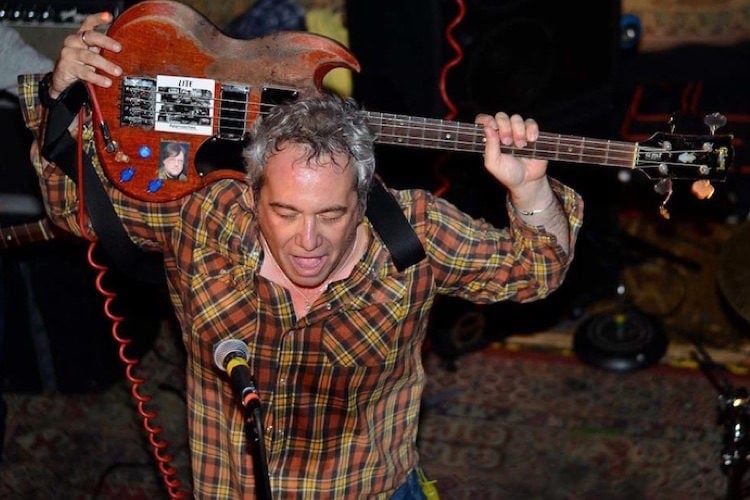
Mike Watt
- Notable Bands: Minutemen, fIREHOSE, The Stooges, Dos, mssv
- Weapon of Choice: Reverend Wattplower, Fender Precision, Gibson EB-3, Gibson Thunderbird
- Essential Track: "Political Nightmare" (Minutemen)
If you want to talk about laying down the groove while treating the bass like a lead instrument, you have to talk about Mike Watt. He essentially wrote the playbook for indie and punk bass playing. Jamming "econo" wasn't just a catchphrase; it was a way of life that translated directly to his playing—no wasted notes, just relentless, frantic, and incredibly melodic lines. You don't need a massive stadium rig or an over-complicated time signature to hit hard, you just need Watt's furious right hand.
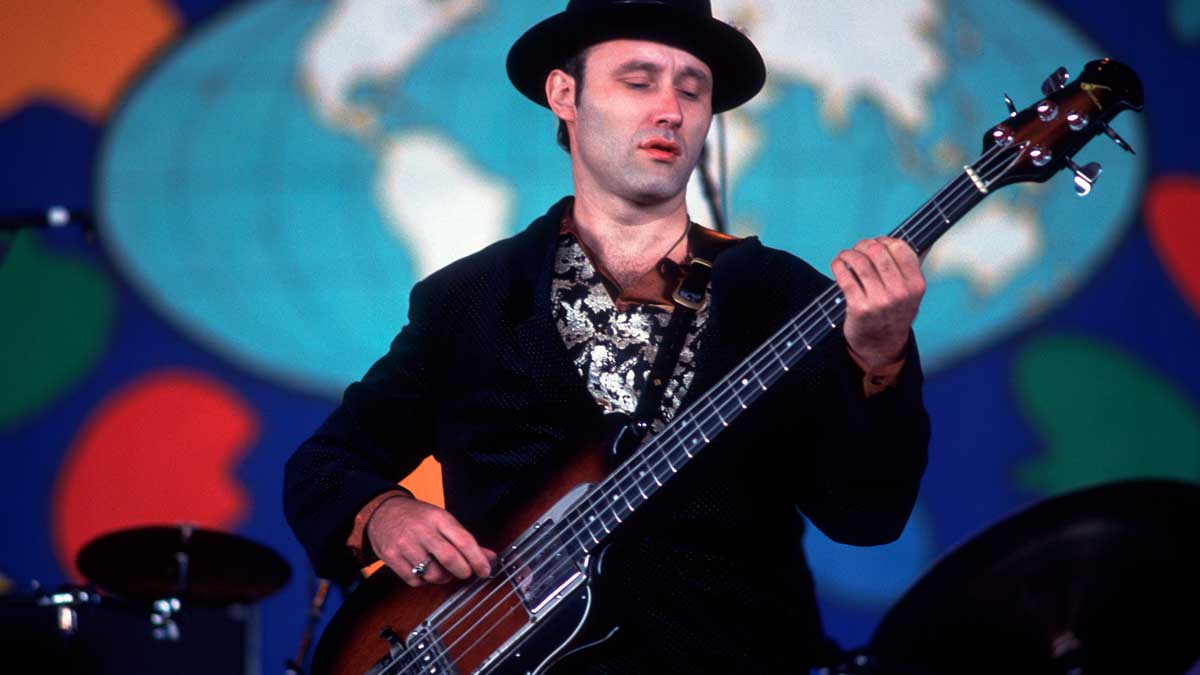
Jah Wobble
- Notable Bands: Public Image Ltd. (PiL), Invaders of the Heart
- Weapon of Choice: Fender Precision Bass, Ovation Magnum
- Essential Track: "Public Image", "Annalisa", "Albatross", "Poptones" (PiL); "Invaders Of The Heart", "Visions Of You" (solo)
Hearing that unimaginably deep, dub-heavy bass tone when I first dropped the tonearm on PiL's First Issue was a completely defining moment. That record holds a special place in my collection — it was the very first import LP I ever bought, picked up on my 14th birthday in 1981 for $12.98. Just like Steve Jones's wall of sound made me want to pick up a guitar, Jah Wobble's massive, booming lines made me want to play bass. He took the spacious, low-end philosophies of reggae and injected them directly into the icy heart of post-punk. He proved that the bass doesn't just have to support the song—it can be the entire foundation that the rest of the band answers to.
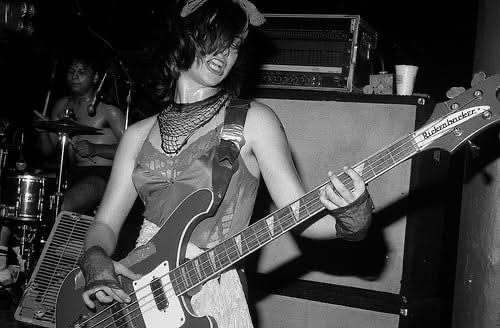
Kira Roessler
- Notable Bands: Black Flag, Dos
- Weapon of Choice: Garza Custom 3/4 Scale Bass, Rickenbacker 4003
- Essential Track: "Slip It In", "Account For What?" (Black Flag); "Number Eight" (Dos)
Kira's playing is an absolute force of nature. When she joined Black Flag, she didn't just survive the band's shift into heavy, frantic, polyrhythmic territory — she anchored it. Her complex, driving basslines cut right through the chaos, bringing a massive, muscular presence to the low end. Beyond that, her intricate dual-bass work with Mike Watt in Dos is a masterclass in tone and phrasing. But my appreciation for Kira goes a bit deeper than just spinning her records. Years ago, when her custom 3/4 scale bass was stolen, I posted a bulletin about it on my old blog. The post ended up catching fire, getting signal-boosted by Boing Boing and the folks at Alternative Tentacles, and it actually played a part in helping her recover the instrument! It remains one of my absolute proudest moments of indie-web detective work.
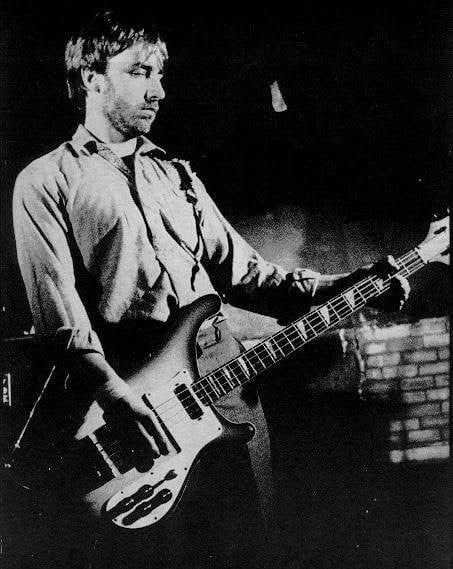
Peter Hook
- Notable Bands: Joy Division, New Order
- Weapon of Choice: Yamaha BB1200S, Shergold Marathon 6-string, Electro-Harmonix Clone Theory Chorus
- Essential Track: "Disorder" (Joy Division) / "The Perfect Kiss" (New Order)
If you're talking about bass as a lead instrument, Peter Hook's name has to be in the conversation. In the early Joy Division days, his gear was supposedly so inadequate that he started playing high up on the neck just so he could hear himself over the guitar and drums. He took that limitation and forged one of the most distinct, heavily chorused signature sounds in music history. He didn't just hold down the rhythm; he drove the actual melody. Hook's playing seamlessly bridged the gap between raw, icy post-punk and the massive, synth-heavy dance tracks of New Order, proving that a rock-solid bassline can carry an entire song.

Tomomi Ogawa
- Notable Bands: SCANDAL
- Weapon of Choice: Fender Precision Bass (Custom Signature Model), Fender Jazz Bass, Ampeg SVT
- Essential Track: "Awanai Tsumori no, Genki de ne" / "Shoujo S"
Since Mami Sasazaki is already featured on the Guitarists page, it's mandatory to highlight the other half of SCANDAL's incredible string section. Tomomi Ogawa's playing is an absolute masterclass in serving the song while still injecting massive amounts of personality into the low end. Whether she's laying down a rock-solid fingerstyle groove, throwing in perfectly timed slap-bass fills, or locking in seamlessly with drummer Rina, she brings a huge, driving energy to the band's sound. And the fact that she regularly pulls off these incredibly active, melodic basslines while sharing lead vocal duties is just mind-blowing. She proves that a great bassist doesn't just sit in the background; they drive the entire track forward.
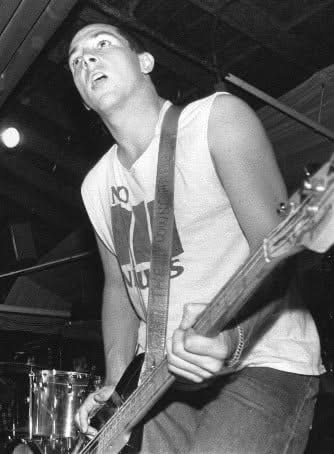
Chuck Dukowski
- Notable Bands: Black Flag, SWA, Würm
- Weapon of Choice: Fender Precision Bass, Acoustic 360 Amplifier
- Essential Track: "Six Pack", "What I See" (Black Flag), "Sex Doctor" (SWA)
If Kira brought complex, driving precision to Black Flag's later years, Chuck Dukowski was the blunt-force instrument that built the house. As a founding member and the ideological engine behind both the band and SST Records, his playing was pure, unrelenting aggression. Chuck didn't just play the bass; he physically attacked it. His tone was massive and intimidating, driven by a heavy fingerstyle attack that sounded like he was trying to snap the strings on every single stroke. Listening to those early EPs and the Damaged album, his basslines are the absolute bulldozer that made Greg Ginn's frantic guitar work possible. Even after he stopped playing with the band, his songwriting DNA remained a massive part of their identity. He proved that sometimes the most important thing a rhythm section can do is lock in, play hard, and flatten everything in its path.

Gerald V. Casale
- Notable Bands: Devo
- Weapon of Choice: Steinberger L-Series Bass, Gibson Ripper, Minimoog (Synth Bass)
- Essential Track: "Satisfaction" / Mongoloid" / "Smart Patrol/Mr. DNA"
If Bob 1 is the six-string architect of Devo, Jerry Casale is the mastermind who poured the concrete foundation. His bass playing often gets completely overshadowed by the band's visual presentation and heavy use of synthesizers, but listening closely to those early records reveals an incredibly tight, driving, and aggressive player. His electric bass work — initially played on a modified Gibson Ripper before he adopted his iconic headless Steinberger, both of which remained still strung as if for a right-handed player — is the nervous, pulsing heartbeat of the band. He played with a rigid, mechanical precision that perfectly anchored the band's odd time signatures and angular riffs. Whether he was laying down the lurching, iconic groove of "Mongoloid" or transitioning seamlessly to playing heavy synth-bass on a Minimoog, his deep understanding of groove was the glue that held Devo's brilliant, subversive chaos together.

Adam Ant
- Notable Bands: Adam and the Ants, Solo Artist
- Weapon of Choice: Fender Precision Bass
- Essential Track: "Dog Eat Dog", "Kings of the Wild Frontier", "Jolly Roger", "Goody Two Shoes"
It is absolutely mandatory to give Adam Ant his proper flowers as a bassist. Because of his massive theatrical presence, pirate aesthetic, and sheer charisma as a frontman, history often completely overlooks his actual musicianship. While it is an incredible piece of underground trivia that he secretly laid down the driving, rhythmic basslines on Kings of the Wild Frontier and Prince Charming when his bandmates weren't up to the task, the real triumph came after the Ants disbanded. When he launched his solo career with 1982's Friend or Foe, he finally went public with his bass duties, taking official credit in the liner notes. His playing perfectly anchors that chaotic, dual-drum, horn-drenched new romantic sound, proving once and for all that he wasn't just the face of the operation — he was the rhythmic architect.

Derf Scratch
- Notable Bands: Fear
- Weapon of Choice: Fender Precision Bass
- Essential Track: "I Love Livin' in the City" / "Let's Have a War"
Derf Scratch is the undisputed rhythmic bedrock (along with drummer Spit Stix) of the Los Angeles hardcore punk scene's most confrontational band. As the founding bassist for Fear, he provided the driving, heavy groove that anchored their debut masterpiece, The Record, their appearance in the documentary The Decline of Western Civilization, and their infamous, chaotic appearance on Saturday Night Live. What truly speaks volumes about his caliber as a musician is the insane pedigree of players it took to replace him. After he left the band in 1982, Fear had to cycle through absolute heavyweights like Eric Drew Feldman (Captain Beefheart), Flea (Red Hot Chili Peppers), and Scott Thunes (Frank Zappa) just to fill the void he left behind. Beyond his flawless playing, his legacy lives on in physical form: the exact bass he used to record Fear's debut and play SNL was eventually purchased by Mike Watt, who used it to record the Minutemen classic What Makes a Man Start Fires?. Derf was an absolute powerhouse who brought a necessary, infectious swing to hardcore punk. Rest in power, Derf.

John Wetton
- Notable Bands: King Crimson, U.K., Asia
- Weapon of Choice: '61 Fender Precision Bass, Hiwatt Custom 100 Amps, Moog Taurus Pedals
- Essential Track: "Red" (King Crimson)
If you want to talk about a bass tone that could level a city block, you have to talk about John Wetton. During his mid-70s run with King Crimson, he essentially weaponized the Fender Precision. Plugging into cranked Hiwatt tube amps and massive folded-horn cabinets, he drove complex prog-rock lines with a ferocious, heavy-handed fingerstyle attack that routinely overpowered the band's own PA system. Wetton proved you could play incredibly melodic, odd-meter counterpoint while still being the loudest, most apocalyptic-sounding force in the room.

Les Claypool
- Notable Bands: Primus, The Claypool Lennon Delirium, Colonel Les Claypool's Fearless Flying Frog Brigade, Sausage, Oysterhead
- Weapon Of Choice: Carl Thompson 4- and 6-string basses; Pachyderm Bass
- Essential Tracks: "Jerry Was A Race Car Driver", "Tommy The Cat" (Primus), "The Awakening" (Les Claypool and the Holy Mackerel)
Let's cut to the chase: Les Claypool is a true mutant in every sense of the word. While any bassist worth his salt will denote any combination of funk and rock bassists as either influences and/or bassists they like to listen to, Claypool synthesises all of his influences: the slap of Larry Graham and Marvin Isley, the complex agility of Geddy Lee, and even Tony Levin's King Crimson-era Stick work ("Jerry Was A Race Car Driver" was clearly influenced by Levin's Stick tapping on "Elephant Talk").Filter that through other random influences like The Residents and XTC (both of whom Primus have recorded covers of), throw in a potpourri of playing styles (tapping, flamenco-like strumming, slapping) and you have yourself a prime example of a "they broke the mold after they made him" bassist.
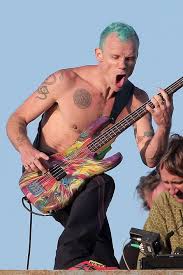
Flea
- Notable Bands: Red Hot Chili Peppers, FEAR, Jane's Addiction, Atoms for Peace, solo
- Weapon of Choice: Music Man StingRay, Modulus Flea Bass, Fender Jazz Bass
- Essential Tracks: "Get Up And Jump", "Fight Like A Brave", "Higher Ground" (Red Hot Chili Peppers), "Bust A Move" (Young MC), "Thinking About You" (solo)
An absolute force of nature who permanently rewired the role of the bass guitar in alternative music, Michael "Flea" Balzary built his foundation on a highly volatile collision of genres. Rooted firmly in the Los Angeles underground—including a brief, crucial stint holding down the rhythm grid for legendary punk outfit FEAR — Flea took the blistering, high-velocity aggression of hardcore and fused it directly with the deep, percussive slap-bass mechanics of traditional P-Funk. Initially operating primarily through highly active Music Man and Modulus basses plugged into massive Gallien-Krueger rigs, his early architecture relied on sheer, frantic physical force. However, his true genius lies in his profound structural evolution. Over the decades, he largely stepped away from relentless slap techniques to engineer deeply melodic, highly complex counter-melodies, proving that a bassline can function as both the unyielding rhythmic anchor and the primary melodic hook of a stadium-sized rock anthem.