

Favorites: Vocalists
Welcome to what is probably going to be one of the most involved sections of this site...

Nat Ćmiel
- Genre / Style: Glitch-Pop, Ambient, Electronic, Shoegaze
- Notable Bands: yeule
- Essential Tracks: "Pixel Affection", "Don't Be So Hard On Your Own Beauty", "x w x", "4ui12", "Eko", "Dudu" (yeule), "We Are Making Out" (Masa Muro feat. yeule), "Memories" (LLLL & yeule)
Completely dismantling the traditional boundaries of the singer-songwriter, Nat Ćmiel — recording and performing as Yeule — treats the human voice not just as an instrument of melody, but as highly malleable digital texture. Merging the ethereal, whisper-soft intimacy of dream pop with the jarring, abrasive chaos of glitch and industrial noise, Ćmiel has constructed a captivating, cyborg-like musical identity. Instead of initially seeking pristine acoustic clarity, they deliberately weaponize heavy pitch-shifting, digital artifacts, and sweeping reverbs to navigate profound themes of emotional vulnerability, technological isolation, and fluid identity. Across masterful, boundary-pushing projects like Glitch Princess and softscars, Ćmiel’s vocal performances act as a fragile human core constantly threatening to dissolve into a sea of digital distortion, proving that modern software manipulation can be just as emotionally devastating as the raw vocal cords themselves. On her 2025 album Evangelic Girl Is A Gun, however, she actually walked back some of the effect usage and let her raw voice carry songs like "1967" and "Dudu".
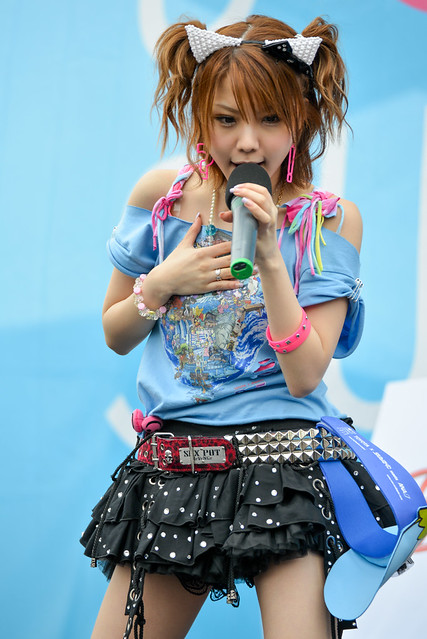
Reina Tanaka
- Genre / Style: J-Pop, Pop-Rock, Rock
- Notable Bands: Morning Musume, LoVendoЯ
- Essential Tracks: "Shabondama", "Ambitious! Yashinteki de Ii Jan", "Resonant Blue", "One Two Three" (Morning Musume), "Ikujinashi", "Ii Janai", "Bukiyou" (LoVendoЯ)
Operating as one of the most technically reliable and instantly recognizable voices in modern J-pop, Reina Tanaka brought an undeniable, rock-tinged swagger to the genre. Best known for her decade-long tenure as a lead vocalist in Morning Musume, she stood out immediately in a landscape that often favored softer aesthetics. Her vocal delivery is fiercely confident, sharp, and remarkably piercing, allowing her to cut cleanly through incredibly dense, heavily layered ensemble mixes with absolute precision. Throughout the group's complex, dance-heavy "Platinum Era," her exceptional pitch stability and driving rhythmic attack acted as the foundational anchor for their sound. Later stepping out to front the rock band LoVendoЯ, Tanaka further cemented her legacy as a versatile powerhouse who masterfully blended immaculate pop sensibilities with a raw, rebellious rock and roll edge.
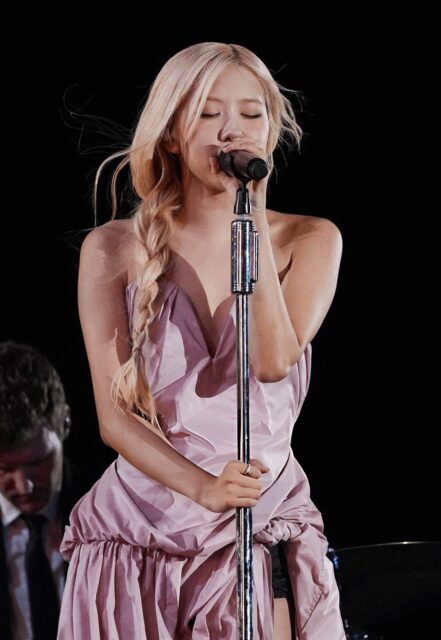
Rosé
- Genre / Style: K-Pop, R&B, Pop-Rock, Indie Pop
- Notable Bands: BLACKPINK, Solo
- Essential Tracks: "On The Ground", "Gone", "APT." (feat. Bruno Mars), "Hard to Love" (BLACKPINK), "Lovesick Girls" (BLACKPINK), "Playing With Fire" (BLACKPINK)
Operating as the unmistakable emotional core of one of the biggest girl groups on the planet, Rosé (born Roseanne Park) brings an entirely unique vocal magic to the massive, global landscape of K-Pop. Possessing a highly distinct, slightly nasal, and incredibly resonant timbre, she has the rare ability to inject genuine indie-pop vulnerability into explosive, heavy-hitting trap and electronic productions. Whether she is belting out stadium-shaking hooks on anthems like "Lovesick Girls," stripping everything back to just her raw vocal and an acoustic guitar on solo cuts like "Gone," or trading undeniable, infectious pop-rock energy with Bruno Mars on the massive global smash "APT.," her Kiwi-Korean roots and international upbringing shine through her effortless, bilingual phrasing. She is a master of emotive delivery, proving that even within the meticulously polished machinery of the modern pop industry, a truly idiosyncratic and soulful voice will always stand out from the pack.
Henry Rollins
- Genre / Style: Hardcore Punk, Post-Hardcore, Alternative Metal, Spoken Word
- Notable Bands: S.O.A., Black Flag, Rollins Band
- Essential Tracks: "Public Defender" (S.O.A.), "My War", "Slip It In" (Black Flag), "Low Self Opinion", "Liar", "Disconnect" (Rollins Band)
Operating as one of the most intense and disciplined frontmen in the history of underground music, Henry Rollins completely redefined the physical and emotional limits of the punk vocalist. While he frequently (and unfairly) dismisses his own singing abilities as mere shouting, Rollins possesses a rich, incredibly powerful baritone that serves as a commanding anchor for his deeply personal lyricism. From his blistering, fast-paced debut with Washington D.C.'s S.O.A., through the grueling, vanguard heavy-lifting of the Black Flag era, and into the muscular, jazz-inflected pummeling of the Rollins Band, his voice has always been a blunt-force instrument of survival and brutally honest poetry. Beneath the feral intensity and the trademark neck-vein-bulging delivery lies a phenomenal sense of phrasing and breath control — honed by decades of relentless spoken-word performances — proving that underneath the hardcore exterior beats the heart of a truly dynamic and compelling orator who could just as easily command a smoky jazz club if he so chose.
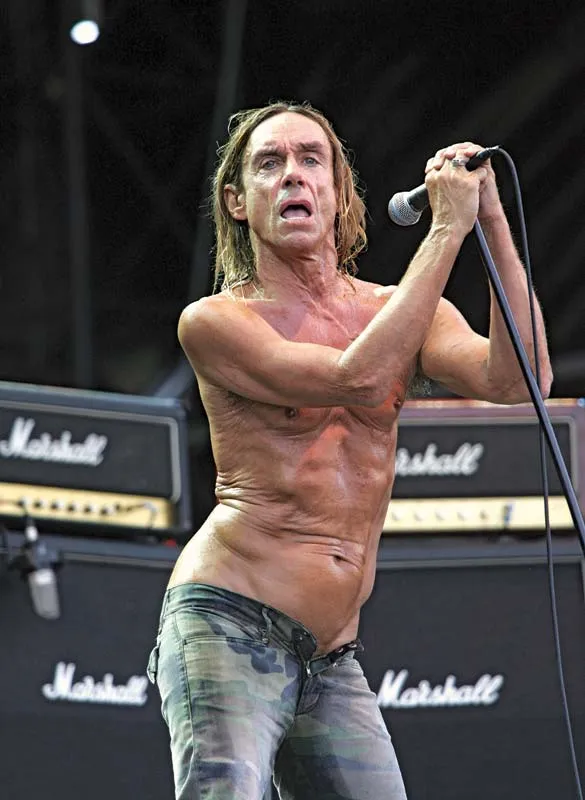
Iggy Pop
- Genre / Style: Proto-Punk, Garage Rock, Art Rock, Post-Punk
- Notable Bands: The Stooges, Solo
- Essential Tracks: "I Wanna Be Your Dog", "1970", "Search and Destroy" (The Stooges), "The Passenger", "Lust for Life", "Nightclubbing"
Operating as the absolute ground zero for alternative rock frontman theatrics, Iggy Pop is an indestructible force of nature whose vocal evolution is just as fascinating as his legendary stage antics. During the initial, chaotic run of The Stooges, his voice was a feral, desperate howl—a primal instrument that perfectly matched the raw, amp-destroying assault of albums like Fun House. Yet, to dismiss him as merely a screaming provocateur is to ignore one of the most expressive and resonant baritones in rock history. When he famously decamped to Berlin with David Bowie in the late 1970s, Iggy stripped away the garage rock distortion and revealed a world-weary, highly theatrical croon on solo masterpieces like The Idiot and Lust for Life. He is a master of contrast, capable of pivoting from a violent, unrestrained shriek to a deep, detached, cabaret-style delivery in a heartbeat, rightfully earning his title as the undisputed godfather of the underground.