

Favorites: Albums — 276 to 300
Do you know where you are? You're a little more than 27% into this list. However, you're not gonna die...

#276: Appetite for Destruction (1987)
Artist: Guns N' Roses
Geffen Records
A profoundly dangerous, high-velocity masterclass in hard rock architecture, Guns N' Roses' 1987 debut Appetite for Destruction completely dismantled the sanitized, overly polished mechanics of the late-80s Sunset Strip. Catching the original, fiercely volatile lineup opening for Aerosmith at Pocono Downs in August 1988 perfectly contextualizes the sheer, real-time momentum of this record as it went supernova. From a production standpoint, Mike Clink engineered a remarkably dry, raw sonic framework that perfectly captured the band's street-level aggression. The mechanical foundation relies on the lethal, heavy-grooving rhythm grid forged by Duff McKagan's punk-inflected basslines and Steven Adler's unmistakable, swing-heavy drumming. This airtight pocket provides a massive runway for a legendary dual-guitar collision: Izzy Stradlin’s driving, blues-based rhythm chugging paired flawlessly with Slash’s iconic, fluid lead structures. Anchored by Axl Rose’s multi-tracked, razor-sharp vocal hostility, the album serves as an unrelenting, flawlessly constructed engine. Driven by foundational anthems like "Welcome to the Jungle" and "Sweet Child o' Mine," it remains an undisputed, unyielding pillar of American rock history.

#277: In My Head (1985)
Artist: Black Flag
SST Records
A towering, fiercely uncompromising monument of heavy underground architecture, Black Flag's 1985 release In My Head represents a massive structural mutation for the band. Originally conceived as an instrumental solo project by guitarist and SST Records founder Greg Ginn, the album entirely discards the breakneck, three-chord velocity of traditional hardcore. In its place, Ginn engineered a highly complex, intensely atonal sonic canvas heavily steeped in grinding, Sabbath-inspired sludge. The mechanical core of this record is terrifyingly proficient, relying on Kira Roessler’s incredibly intricate, melodic basslines locking flawlessly into Bill Stevenson’s punishing, jazz-inflected drum grids. This airtight, deeply heavy foundation provides the ultimate claustrophobic environment for Henry Rollins. Forced to adapt to the slower, grinding tempos, Rollins delivers a brooding, intensely paranoid vocal performance that borders on spoken-word menace. It stands as a brilliant, polarizing piece of machinery that proves the band was never content to simply rest on their foundational punk rock laurels.
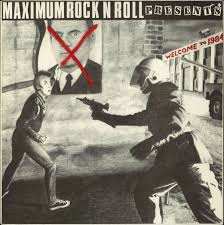
#278: MaximumRockNRoll presents Welcome To 1984 (1984)
Artist: Various Artists
MaximumRockNRoll
A foundational, world-building document of the international underground, Welcome to 1984 completely shattered the illusion that hardcore punk was an isolated, localized phenomenon. Curated by the legendary MaximumRockNRoll fanzine, this compilation functions less like a traditional album and more like a high-velocity, global communications grid. Actively bypassing corporate distribution mechanics, the record physically linked fiercely independent punk scenes from across the world onto a single piece of vinyl. By capturing the blistering, unvarnished aggression of bands like Finland's Rattus, Italy's Raw Power, and Brazil's Olho Seco, the project essentially engineered the structural blueprint for the global DIY tape-trading and touring networks. Against the backdrop of the era's looming Orwellian paranoia, MRR effectively proved that a deeply connected, highly motivated, and structurally unyielding international counterculture was already operating at full capacity. It remains an undisputed, vital artifact of raw, borderless punk architecture.

#279: Songs of Love and Hate (1971)
Artist: Leonard Cohen
Columbia
After the punishing volume and velocity of the underground rock scene, Leonard Cohen's 1971 masterpiece proves that you do not need blown-out amplifiers to be absolutely devastating. Songs of Love and Hate is an exercise in stark, terrifying intimacy. Stripping back the warmer, more romantic production of his previous records, Cohen constructs a profoundly bleak acoustic architecture. The instrumentation is incredibly sparse, driven primarily by his intricate nylon-string guitar work, and occasionally ornamented by deeply unsettling choral arrangements or isolated, shivering strings. Anchored by the vicious, cascading, aggressive acoustic riff of "Avalanche" (famously covered by Nick Cave and the Bad Seeds to open their first album) and the emotionally exhausted, late-night confession of "Famous Blue Raincoat," the album operates as a raw, unflinching descent into the darkest corners of the human psyche. It is a heavy, uncompromising, and structurally flawless document of despair.

#280: Rastaman Vibration (1976)
Artist: Bob Marley & The Wailers
Island Records
An absolute masterclass in balancing militant roots reggae with pristine, international studio architecture, 1976's Rastaman Vibration is a profoundly radical and beautifully engineered record. Serving as the band's major commercial breakthrough in the United States, Bob Marley refused to dilute his political ferocity, delivering scathing critiques of systemic oppression on tracks like "Rat Race" and "Crazy Baldhead," alongside the stunning "War," a track built entirely from a speech by Haile Selassie. From a structural standpoint, the album's machinery is flawless. The legendary rhythm section of Aston "Family Man" Barrett and drummer Carlton Barrett locks down an unyielding, hypnotic low-end grid, providing a massive foundation for the complex, soaring vocal harmonies of the I Threes. It remains a vital, uncompromising masterpiece that proved an intensely political, anti-establishment message could successfully dominate the global pop charts without losing a fraction of its heavy, authentic groove. And as a bonus for those into absorbing Rastaman vibrations in a way proscribed in Genesis 1:29, the inner gatefold explicity states "This album jacket is great for cleaning herb."
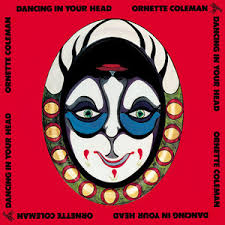
#281: Dancing in Your Head (1977)
Artist: Ornette Coleman
Horizon / A&M
The exact moment the rigid boundaries separating free jazz, funk, and rock completely disintegrated, Ornette Coleman's 1977 release Dancing in Your Head is an explosive, high-velocity masterclass in his revolutionary "harmolodic" theory. Serving as the debut recording for his legendary Prime Time ensemble, the album operates on a terrifyingly complex, intertwining sonic grid. The massive, two-part centerpiece, "Theme from a Symphony," is anchored by the recording debut of Jamaaladeen Tacuma (credited here under his birth name, Rudy McDaniel), who fundamentally rewired the role of the electric bass. Alongside drummer Ronald Shannon Jackson, Tacuma lays down a frantic, relentless, and deeply funky low-end architecture. This unyielding rhythm section supports the chaotic, dueling lead guitars of Bern Nix and Charlie Ellerbee, allowing Coleman's fractured alto saxophone to soar wildly over the mix. It is a vital, structurally unhinged masterpiece that laid the direct groundwork for the no wave and post-punk scenes that followed.

#282: Variation (1982)
Artist: Akina Nakamori
Reprise / Warner Pioneer
An absolute watershed moment in the history of 1980s Japanese pop architecture, Akina Nakamori's second studio album, Variation, systematically dismantled the sunny, hyper-innocent idol template of the era. Releasing this in 1982, Nakamori positioned herself as the vital, rebellious counterpoint to the established pop machinery. The album's structural core is anchored by the massive, slightly controversial hit "Shoujo A" (Girl A), a track that seamlessly injects a driving, rock-tinged edge into pristine studio pop. Rather than forcing her vocals into a standard, breathy high register, the record's sophisticated Kayokyoku and City Pop arrangements — complete with razor-sharp brass, sweeping strings, and heavy basslines — are expertly engineered to highlight Nakamori's rich, husky, and deeply resonant lower timbre. It is a slick, melancholic, and highly stylized masterclass that permanently rewired the expectations of mainstream idol music.
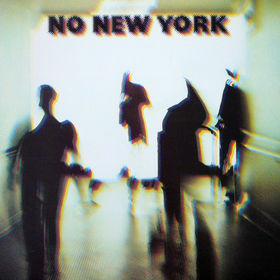
#283: No New York (1978)
Artist: Mars, Teenage Jesus & The Jerks, DNA, and James Chance
& The Contortions
Antilles / Island
An indispensable, abrasive document of downtown Manhattan's No Wave scene, 1978's No New York is the sound of rock music being actively dismantled. While traditional punk bands were merely playing three-chord blues progressions at a higher velocity, the four bands featured here—curated and produced by Brian Eno—completely abandoned conventional melody, tuning, and song structure. It operates as a four-way collision of sonic hostility: James Chance and the Contortions violently twist James Brown-style funk and harmolodic free-jazz into angular, jagged attacks; Lydia Lunch's Teenage Jesus and the Jerks deliver suffocating, micro-dirges of pure spite; while Mars and DNA engineer deeply alien, atonal, and mathematically terrifying soundscapes. It is an anti-commercial, deeply cynical, and structurally uncompromising masterclass in musical deconstruction that permanently altered the trajectory of the American underground.
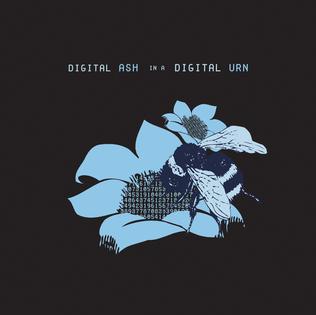
#284: Digital Ash in a Digital Urn (2005)
Artist: Bright Eyes
Saddle Creek
Paul Roessler, ex-Screamers keyboardist (and the brother of Black Flag bassist Kira) told me back in the MySpace days that he found Bright Eyes' 2005 album Digital Ash in a Digital Urn to be, in his words, "amazing". And given his history as a foundational architect of the LA synth-punk movement, that's high praise indeed. And I fully agreed with him, because I'd already been hip to the album for a few months at the time. Digital Ash... is the sound of indie folk being systematically dismantled and rebuilt inside a sequencer. Released on the exact same day as its traditional, acoustic counterpart (I'm Wide Awake, It's Morning), this album completely abandons organic warmth in favor of a cold, glitchy, and highly synthesized electronic architecture. Frontman Conor Oberst, collaborating heavily with producer Mike Mogis and Jimmy Tamborello, replaced his standard acoustic strumming with dense, intricate layers of programmed drum machines, digital textures, and driving synthesizer lines. The result is a masterclass in meticulous studio engineering. By trapping his deeply paranoid, hyper-intimate lyricism inside a sterile, mechanical pop engine, Oberst successfully bridged the gap between organic songwriting and cold, calculated electronic production. It remains a deeply underappreciated, visionary experiment in digital dread.

#285: You Are What You Is (1981)
Artist: Frank Zappa
Barking Pumpkin
You Are What You is was the first Frank Zappa album I ever bought, spurred on by a rebroadcast of his legendary Halloween 1981 MTV concert on Night Flight; that combination made me a fan of the man for life. An absolute masterclass in cynicism and studio engineering, You Are What You Is serves as Frank Zappa's most direct, highly concentrated assault on the plastic culture of the Reagan era. Built to operate as a continuous, interlocking suite, the album completely disguises its terrifying musical complexity underneath deeply weird, accessible pop hooks. Backed by a powerhouse lineup — including the iconic vocal duo of Ray White and Ike Willis, and a young Steve Vai executing impossible guitar architecture — Zappa systematically dismantles televangelists, yuppies, and societal hypocrisy with razor-sharp precision. The production is incredibly dense and heavily overdubbed, yet the rhythm section remains locked in a relentlessly tight, funky groove. It is an uncompromising, visionary machine of an album, and a structurally flawless gateway into Zappa's sprawling, intimidating catalog.

#286: New Hope For The Wretched (1980)
Artist: Plasmatics
Stiff America
If the majority of the punk scene was busy trying to play the blues as fast as humanly possible, the Plasmatics were busy actively destroying the stage. 1980's New Hope for the Wretched is the foundational document of Wendy O. Williams' absolute reign of shock and awe. While the band is heavily remembered for their terrifying, highly theatrical live shows involving chainsaws, sledgehammers, and explosives, this debut album proves that the musical architecture underneath the spectacle was fiercely constructed. GuitaristsRichie Stotts and Wes Beech effectively bridged the gap between 70s punk velocity and 80s heavy metal riffage, building a massive, grinding wall of sound on tracks like "Butcher Baby" and "Corruption." Anchored by Jean Beauvoir's fluid bass work and topped off with Williams' unhinged, raspy, and entirely fearless vocal delivery of Ron Swenson's zen-like lyrics, it is a brilliantly heavy, uncompromising record that made the rest of the underground rock scene look practically polite by comparison.

#287: Pleased To Meet Me (1987)
Artist: The Replacements
Sire
An absolute masterclass in alternative rock songwriting, 1987's Pleased To Meet Me captures The Replacements at a massive structural crossroads. Operating for the first time without the wildly unpredictable lead guitar machinery of Bob Stinson, frontman Paul Westerberg shouldered the entire six-string architecture — something he had already done on the slower cuts on the band's previous two albums — and steered the band straight into Ardent Studios in Memphis. Working alongside legendary producer Jim Dickinson, the band aggressively fused their ragged, emotionally desperate Minneapolis punk roots with heavy doses of Memphis soul and R&B. The production is pristine without ever feeling sterile, utilizing brilliant Stax-style horn sections on the towering "Can't Hardly Wait" and delivering the ultimate, high-velocity tribute to power-pop royalty with "Alex Chilton." Anchored by an incredibly tight, dialed-in rhythm section courtesy of Tommy Stinson and Chris Mars, the album successfully bridges the gap between chaotic bar-band energy and brilliant, world-class studio pop.
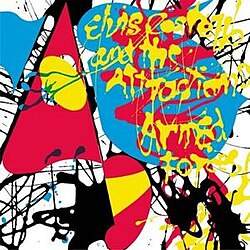
#266: Armed Forces (1979)
Artist: Elvis Costello and the Attractions
Radar / Columbia
Armed Forces is the exact moment Elvis Costello and the Attractions completely weaponized their melodic sensibilities. Stepping away from the raw, amphetamine-fueled pub-rock venom of their earlier work, the band collaborated with producer Nick Lowe to build a pristine, highly polished new wave architecture. The structural genius of the album lies in its terrifying contrast: Costello takes deeply paranoid, cynical lyricism concerning political violence, fascism, and romantic manipulation, and traps it inside bright, impossibly catchy pop machinery. Keyboardist Steve Nieve operates as the album's primary architect, laying down swirling, carnival-esque synthesizer and organ lines that dominate the mix on tracks like "Oliver's Army" and "Accidents Will Happen." Driven by the airtight, wildly inventive rhythm section of Bruce and Pete Thomas, it is a slick, razor-sharp document of emotional dread disguised as a massive mainstream hit.

#289: Hatsu (2000)
Artist: Whiteberry
Sony Music Records
Hatsu, the full-length debut from Hokkaido's pop-punk princesses Whiteberry, perfectly captures the unbridled exuberance of Japanese teenage punk. Emerging from Hokkaido, this all-female quintet operated with a deceptive, highly disciplined musical architecture despite their youth. Heavily influenced by the manic, colorful blueprint of Judy and Mary, the band engineered a fiercely tight, ska-punk infused pop engine. The rhythm section provides a relentless, driving bounce, while the aggressive, crunchy guitar work perfectly frames Yuki Maeda's piercing, hyper-energetic vocal delivery. The album's structural anchor is undeniably their monumental, high-speed cover of Jitterin' Jinn's "Natsu Matsuri" (Summer Festival)—a track they executed with such overwhelming precision and joy that it permanently rewired the cultural DNA of Japanese summers. It is a brilliant, sugary, and entirely uncompromising slab of turn-of-the-millennium pop-punk.

#290: Californication (1999)
Artist: Red Hot Chili Peppers
Warner Bros.
Californication marks the miraculous return of guitarist John Frusciante to the Red Hot Chili Peppers. Stepping away from the frantic, hyper-kinetic funk-metal machinery of their early years, the band completely rewired their sound into something deeply melodic, melancholic, and undeniably Californian. Frusciante's minimalist, Hendrix-inspired guitar work perfectly complements Flea's evolution away from blunt-force slap techniques and toward highly intricate, McCartney-esque counter-melodies. Tracks like "Scar Tissue" and the sprawling title track proved the band could construct massive anthems built on vulnerability rather than sheer physical force. On a purely personal archival note, the accompanying tour for this record holds a monumental spot in the history of this database: catching the band at the Mohegan Sun Arena at Casey Plaza in Wilkes-Barre marked the singular time, to date, that I finally got to witness live a group I had been religiously following since their self-titled debut dropped back in 1984. It is a vital, triumphant, and perfectly engineered comeback.
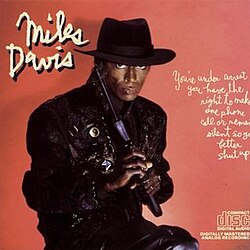
#291: You're Under Arrest (1985)
Artist: Miles Davis
Columbia
An absolute structural middle finger to rigid jazz purists, Miles Davis’s 1985 release You're Under Arrest is the exact moment he proved that the Great American Songbook didn't stop being written in the 1950s. While traditionalists balked at his use of slick, synthesizer-heavy 80s pop production, Davis understood that the mechanics of a brilliant composition are universal. By taking Cyndi Lauper's pristine pop ballad "Time After Time" and running it through his deeply melancholic, instantly recognizable muted trumpet machinery, Miles unilaterally canonized it as a modern jazz standard. The historical impact of this specific inclusion is staggering: his definitive co-sign opened the floodgates for thousands of subsequent cover versions across the globe. The resulting tidal wave of BMI royalty checks effectively bankrolled Lauper's long-term artistic freedom, ensuring she never had to musically stagnate or compromise her own fiercely independent trajectory. It is an uncompromising, highly synthesized document of a restless architect who absolutely refused to be trapped inside a museum.
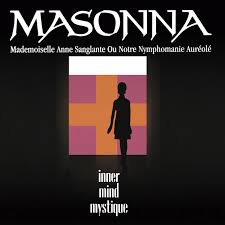
#292: Inner Mind Mystique (1996)
Artist: Masonna
Alchemy Records / Release Entertainment
(Relapse)
If traditional punk rock was about tearing down musical conventions, Japanoise pioneer Maso Yamazaki completely obliterated the very concept of the audible spectrum. As the mastermind behind Masonna, his 1996 release Inner Mind Mystique is an uncompromising, concussive middle finger to traditional song structure. Utilizing a deeply unorthodox, highly physical setup — a violently agitated, custom-built rig of chained effects pedals and contact mics, layered with his own heavily distorted vocal shrieks — Yamazaki weaponizes pure, unadulterated feedback. However, the true brilliance of this specific record lies in its terrifying, acid-drenched undertones. It operates as a hyper-kinetic, cosmic psychedelic trip dragged kicking and screaming through a completely blown-out amplifier. Crucially, this album marks a massive historical milestone in the extreme music timeline: courtesy of Relapse Records' Release Entertainment imprint, it served as Masonna's first truly widespread release, successfully exporting this magnificent, suffocating slab of Japanese auditory violence to a completely unsuspecting global audience.

#293: Meat Is Murder (1985)
Artist: The Smiths
Rough Trade / Sire
The shot heard around the workd known as Meat Is Murder captures The Smiths operating with militant precision and broadened sonic horizons. If their debut album established their signature sound, guitarist Johnny Marr used this sophomore effort to completely rewire the machinery. Moving beyond his traditional, intricate Rickenbacker jangle, Marr aggressively injected rockabilly frameworks ("Rusholme Ruffians") and fiercely syncopated, Chic-inspired funk ("Barbarism Begins at Home") into the band's structural grid. This expansion allowed bassist Andy Rourke to step forward and lay down some of the most intricate, punishing low-end grooves of the 1980s indie era. Operating over this incredibly versatile, locked-in rhythm section, Morrissey completely weaponized his melancholy, delivering scathing, uncompromising lyrical assaults on the educational system and the meat industry. It remains a brilliantly constructed, deeply political record that proved so-called "college rock" could be just as dangerous as the punk scene that preceded it.

#294: Sorcerer (Original Motion Picture Soundtrack) (1977)
Artist: Tangerine Dream
MCA Records
An absolute masterclass in brooding, sequencer-driven Berlin School electronics, Tangerine Dream's 1977 score for Sorcerer is so structurally flawless that the film itself is completely secondary. Director William Friedkin famously commissioned the music before a single frame of footage was shot, allowing the pioneering German trio to construct a dark, oppressive, and heavily synthesized sonic architecture relying entirely on their own intuition. Driven by menacing Moog bass grids, intricate modular sequencing, and spectral Mellotron layers, the machinery of this album generates an unrelenting sense of dread and tension. In the history of this archive's curation, the purchasing rule for this band has always been incredibly simple: if the Tangerine Dream name is stamped on a soundtrack, the immediate reaction is "shut up and take my money." I have never actually seen Sorcerer — or realistically, almost any of the movies they've scored, except for Risky Business — and this record is exactly why it doesn't matter. They didn't just write background music; they engineered a standalone, terrifying cinematic universe that exists entirely within the listener's own head.

#295: More Specials (1980)
Artist: The Specials
2 Tone / Chrysalis
An absolutely massive, uncompromising left turn, 1980's More Specials completely dismantled the hyper-kinetic ska-punk blueprint that made the band famous. Rather than repeating the high-velocity formula of their Elvis Costello-produced debut, primary architect Jerry Dammers, acting as co-producer with the band's soundman Dave Jerden, boldly rewired the machinery to reflect the bleak, paranoid reality of early Thatcher-era Britain. Aggressively injecting bizarre lounge music, unsettling Muzak textures, and deep, spacious dub reggae into the sonic grid, the album operates as a deeply cynical and atmospheric record. Tracks like "Stereotype" and "Man at C&A" are steeped in nuclear dread and societal decay, yet the band brilliantly disguises this existential terror underneath tight, fiercely rhythmic, and almost carnival-esque pop structures. The 2-Tone ska wasn't entirely gone, thanks to the evidence of tracks like "Rat Race" and "Hey Little Rich Girl" (both composed by lead guitarist Roddy "Radiation" Byers). Supported by an incredibly versatile rhythm section (bassist Horace Panter and the late John Bradbury on drums) that handles the genre-hopping with militant precision, it is a brilliantly weird, heavily textured masterclass that proved the 2 Tone movement was capable of stunning structural evolution.

#296: Cloudland (1989)
Artist: Pere Ubu
Fontana
An incredibly fascinating structural anomaly within the band's sprawling catalog, 1989's Cloudland is the exact moment the pioneers of Cleveland's "avant-garage" actively hijacked the mainstream pop machinery. Rather than relying on the rusted, industrial dissonance of their foundational 1970s work, frontman David Thomas steered the band toward a pristine, highly synthesized, radio-ready architecture, even bringing in heavyweight pop producers (one of whom, Stephen Hague, was a huge Pere Ubu fan) to polish the engine. However, the brilliance of the album lies in their absolute inability to be entirely normal. While tracks like "Waiting for Mary" and "Breath" are built on driving, undeniably catchy rhythmic grids, they are constantly subverted by Thomas's eccentric, warbling vocal delivery and the deeply alien, atmospheric synthesizer textures woven throughout the mix. It operates as a brilliant, subversive Trojan Horse — a weird, eccentric post-punk band flawlessly executing an accessible pop record without sacrificing a single drop of their fundamental strangeness.
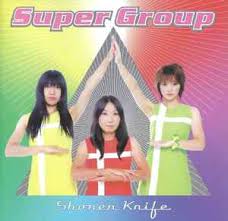
#297: Super Group (2008)
Artist: Shonen Knife
Good Charamel / P-Vine
The stripped-down, high-velocity pop-punk of 2008's Super Group proves exactly why Shonen Knife has remained a foundational pillar of the global underground for decades. While other bands inevitably complicate their machinery over time, primary architect and undeniable punk-rock icon Naoko Yamano knows better than to mess with a flawless grid. She keeps the engine running entirely on aggressive, buzzsaw Ramones-style guitar downstrokes, impossibly tight rhythm sections, and sugary, infectious vocal melodies. Tracks like the title cut and "Muddy Bubbles Hell" are executed with a ferocious, distilled energy that bands a third of their age completely fail to capture. Commanding an untouchable, timeless reverence across both the punk and J-pop scenes, Naoko bridges the gap with effortless, enduring cool. It is a relentlessly fun, structurally bulletproof record from a band that simply refuses to rust.
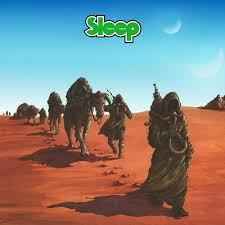
#298: Dopesmoker (2003)
Artist: Sleep
Tee Pee / Southern Lord / Third Man Records
An absolute monolith of heavy metal architecture, Sleep's Dopesmoker completely abandons conventional song structure in favor of a single, 63-minute, tectonic crawl. Operating at a glacial pace, guitarist Matt Pike constructs a suffocating, impenetrable wall of fuzz-drenched riffs, perfectly anchored by Chris Hakius's deliberate, pounding drum pocket and Al Cisneros's hypnotic, chanted vocals. Famously rejected by their major label for being utterly uncommercial, the album's chaotic release history only fueled its legendary status. Sitting proudly within this archive's physical footprint is the essential "Indica"-colored vinyl pressing from the brilliant Southern Lord reissue campaign. Furthermore, immense credit must be paid to Jack White, who recently opened the doors of Third Man Records to the Weedians, pressing gorgeous new editions and ensuring this uncompromising, slow-motion doom masterpiece continues to blow out speaker cones for future generations.
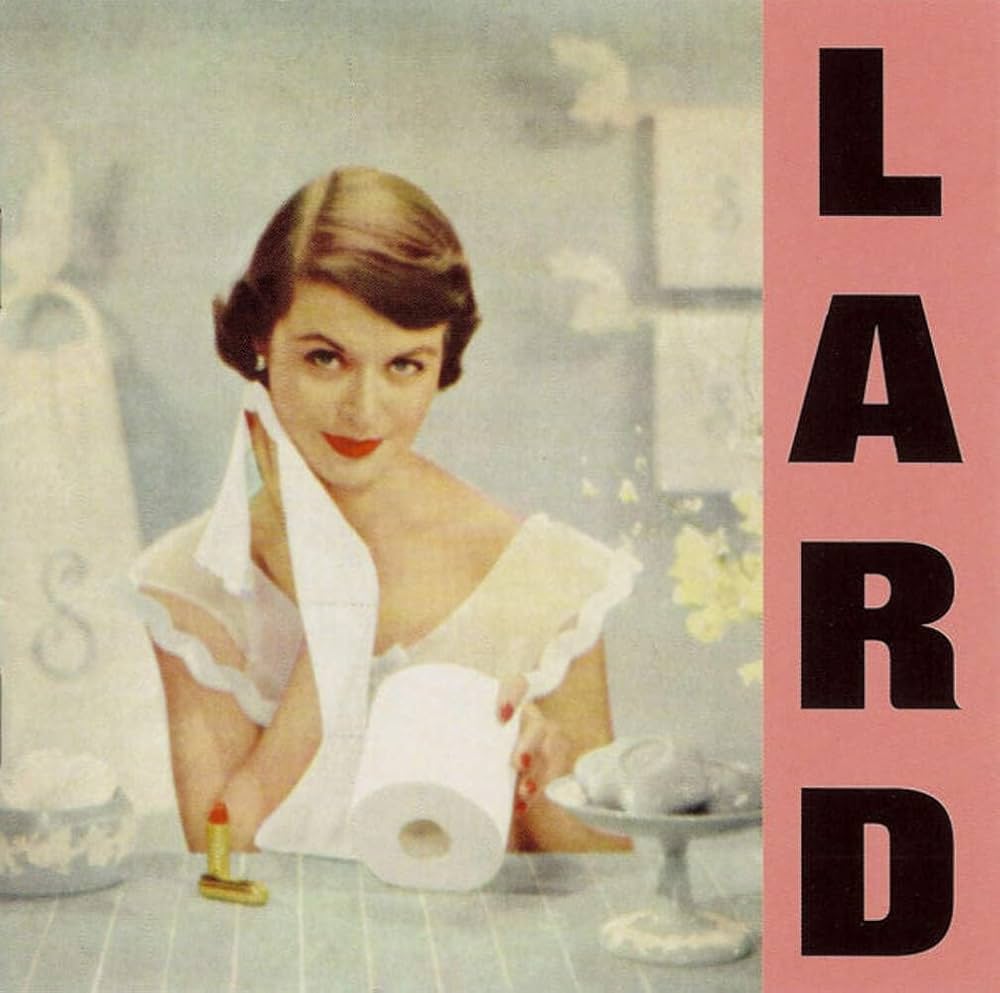
#299: Pure Chewing Satisfaction (1997)
Artist: LARD
Alternative Tentacles
An incredibly violent and deeply cynical collision of two distinct underground worlds, 1997's Pure Chewing Satisfaction is the sound of industrial machinery actively grinding up punk rock. Operating as a legendary supergroup, the project pairs the frantic, paranoid lyricism of Dead Kennedys frontman "Uncle" Jello Biafra with the crushing, heavily sequenced metallic architecture of Ministry's "Uncle" Al Jourgensen and Paul Barker. Rather than slowing down to a standard industrial trudge, Jourgensen and Barker engineer hyper-accelerated, drum-machine-driven thrash grids that provide the perfect, hostile backdrop for Biafra's trembling vocal assaults. Tracks like "War Pimp Renaissance" and "I Wanna Be a Drug-Sniffing Dog" are relentless sociopolitical fever dreams backed by military-grade electronic destruction. It is an unapologetic, razor-sharp masterclass in mechanized sarcasm and high-velocity aggression.
#299: Pure Chewing Satisfaction (1997)
Artist: LARD
Alternative Tentacles
An incredibly violent and deeply cynical collision of two distinct underground worlds (or are they just kissing cousins?), 1997's Pure Chewing Satisfaction is the sound of industrial machinery actively grinding up punk rock. A legendary supergroup, the project pairs the frantic, paranoid lyricism of Dead Kennedys frontman "Uncle" Jello Biafra with the crushing, heavily sequenced metallic architecture of Ministry's "Uncle" Al Jourgensen and Paul Barker. Rather than slowing down to a standard industrial trudge, Jourgensen and Barker engineer hyper-accelerated, drum-machine-driven thrash grids that provide the perfect, hostile backdrop for Biafra's trembling vocal assaults. Tracks like "War Pimp Renaissance" and "I Wanna Be a Drug-Sniffing Dog" are relentless sociopolitical fever dreams backed by military-grade electronic destruction. It is an unapologetic, razor-sharp masterclass in mechanized sarcasm and high-velocity aggression.

#300: Ruby (2025)
Artist: JENNIE
Odd Atelier / Columbia Records
An absolute masterclass in billion-dollar pop architecture, 2025's Ruby serves as a massive structural milestone for both this archive and JENNIE's career. Stepping outside the colossal, globally dominant machinery of BLACKPINK, Jennie Kim used her debut solo full-length to build an independent empire under her own Odd Atelier label. Fully embracing her "Jennie Ruby Jane" alter-ego, she engineers a fiercely confident, highly polished collision of pop, R&B, and hip-hop. Rather than relying on standard idol-pop formulas, the album thrives on a slick, swaggering, and deeply cinematic production grid. On tracks like the hurtling "Like JENNIE" and the razor-sharp "Mantra," she weaponizes her signature cool, backed by a staggering roster of collaborators including Dua Lipa and Childish Gambino. It is a triumphant, meticulously constructed record that proves the absolute highest echelons of modern pop music can hit with just as much structural force as anything else on this grid.