

Favorites: Albums — 76 to 100
Pleasures both known and unknown...
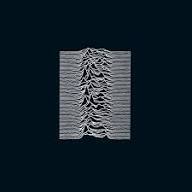
#76: Unknown Pleasures (1979)
Artist: Joy Division
Factory Records
Unknown Pleasures didn't just capture the bleak, industrial atmosphere of late-'70s Manchester; it completely revolutionized how a rock band could be recorded. Producer Martin Hannett utilized groundbreaking studio techniques, digital delay, and physical space to make the silence between the notes sound just as heavy as the music itself. With Bernard Sumner's jagged, scraping guitars and Stephen Morris's machine-like precision on the drums, Peter Hook was forced to play his bass melodies high up on the neck just to cut through the mix — inadvertently inventing a playing style that would define the next decade of alternative music. Grounded by Ian Curtis's haunting baritone delivery and devastating lyricism, it is a chilling, atmospheric masterpiece that continues to cast a massive shadow over everything from goth and post-punk to modern electronic music.

#77: Venereology (1994)
Artist: Merzbow
Release Entertainment
If there is an absolute ceiling to how extreme recorded music can get, Masami Akita shattered it with Venereology. Serving as the definitive gateway into the Japanoise movement, this 1994 masterpiece is a relentless, visceral endurance test of overloaded electronics, shrieking feedback, and abrasive tape manipulation. What makes it so utterly brilliant isn't just the sheer, punishing volume, but the incredible depth and dynamic texture of the audio engineering underneath the chaos. Because it was distributed through a subsidiary of the extreme metal label Relapse Records, it successfully crossed over, arriving in the hands of unsuspecting punks and metalheads to completely rewrite their definitions of "heavy." It is a massive, uncompromising wall of pure sonic violence that demands to be felt just as much as it is heard.
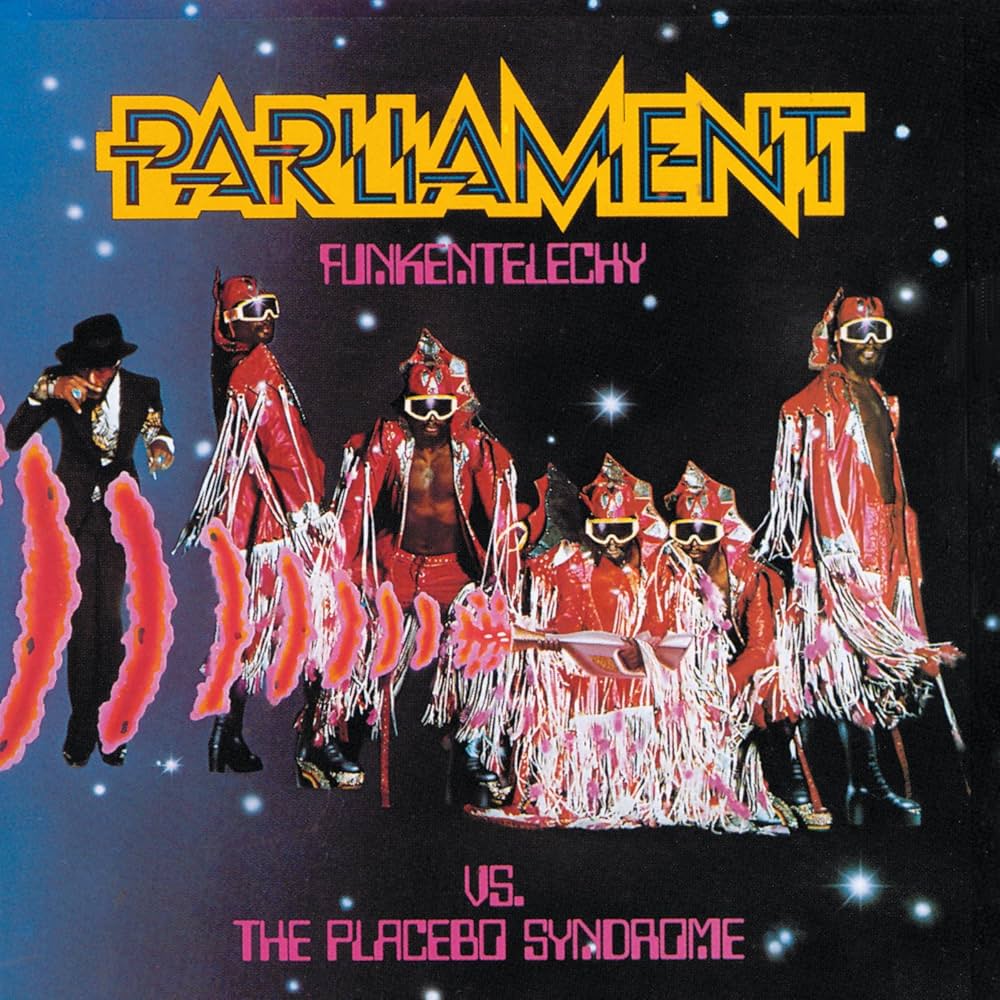
#78: Funkentelechy vs. The Placebo Syndrome (1977)
Artist: Parliament
Casablanca Records
At the absolute peak of George Clinton's sprawling, comic-book P-Funk mythology sits 1977's Funkentelechy vs. The Placebo Syndrome. It is a brilliant, bizarre conceptual masterpiece detailing the epic battle between Starchild and Sir Nose D'Voidoffunk, a villain who strictly refuses to dance. But the true triumph of the record is the sheer, unstoppable weight of the music itself. With Bootsy Collins laying down a masterclass in heavy, rubbery funk, the band is tighter, weirder, and more expansive than ever. The absolute secret weapon of this album, however, is Bernie Worrell completely rewriting the rules of the low-end by playing the legendary, earth-shattering bassline to "Flash Light" entirely on a Minimoog (Bootsy Collins took over the drum throne on the same track). It is the exact kind of brilliant, boundary-pushing synth work that makes firing up a software emulator on an iMac today to chase those same cosmic tones so endlessly rewarding. It is a foundational text for hip-hop, electronic music, and anyone who understands the unadulterated power of the groove.
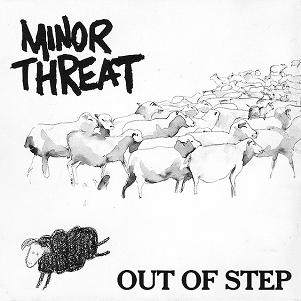
#79: Out of Step (1983)
Artist: Minor Threat
Dischord Records
Minor Threat’s sole full-length studio album, Out of Step, is an absolute, undeniable pillar of American hardcore. Expanding into a five-piece — with Brian Baker shifting over to second guitar to make room for Steve Hansgen on bass — the band achieved a much thicker, heavier wall of sound without sacrificing a single ounce of their blinding speed. Packed with definitive anthems, the album is famously anchored by the title track, featuring Ian MacKaye’s furious, spoken-word breakdown that further solidified the straight-edge ethos. From a strictly audiophile standpoint, the record is packed with incredible minutiae: despite being cut to a 12-inch vinyl slab, it actually spins at 45 RPM for maximum fidelity. Even more fascinating is the existence of two completely distinct mixes. While the rest of the world is intimately familiar with the first mix — the one permanently immortalized on CD via the Complete Discography compilation — having that rare, alternate second mix right there on your shelf is the ultimate vinyl collector's flex. It is a blisteringly fast 21-minute document of a scene shifting into its highest gear.
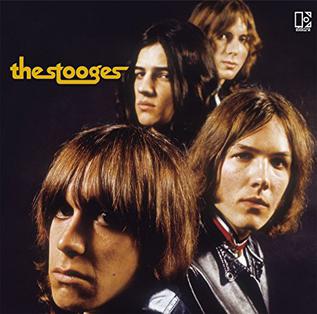
#80: The Stooges (1969)
Artist: The Stooges
Elektra Records
In 1969, the "Summer of Love" was officially dead, and The Stooges arrived to furiously dance on its grave. Their eponymous debut is an absolute masterclass in primal, three-chord aggression, driven by Ron Asheton's menacing, fuzz-drenched guitar riffs and Iggy Pop's unhinged, dangerous vocal delivery. Tracks like "I Wanna Be Your Dog" and "1969" didn't just predict the punk rock explosion that was still almost a decade away; they essentially wrote the entire rulebook. The album's production history is just as fascinating as the music itself. Velvet Underground multi-instrumentalist John Cale originally produced and mixed the record, but Elektra executives deemed his stripped-down, artier mix too flat and demanded a punchier remix by Iggy and label head Jac Holzman for the official release. For decades, Cale's rejected "closet mix" was the stuff of legend, eventually surfacing as bonus tracks on the mid-2000s deluxe CD reissue. But physical media justice was finally served in 2020, when Cale's original, unabridged vision was finally granted its very own, standalone vinyl release.
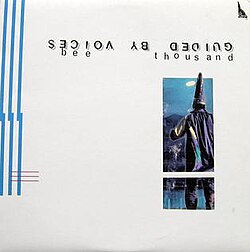
#81: Bee Thousand (1994)
Artist: Guided By Voices
Scat / Matador Records
With Bee Thousand, Guided By Voices delivered a brilliant, fractured masterpiece that permanently elevated the concept of basement recording. Robert Pollard is essentially a classic rock frontman trapped in an indie-punk budget, and this album overflows with 20 brilliant, bite-sized bursts of British Invasion-style pop perfection completely buried under a thick, glorious layer of 4-track cassette tape hiss. Clocking in at just over 36 minutes, songs like "Tractor Rape Chain," "I Am a Scientist," and "Gold Star for Robot Boy" feel like faded transmissions from a brilliant, forgotten 1960s jukebox. It is a messy, chaotic collage of false starts, abrupt endings, and fragmented brilliance that proved you don't need a polished studio environment to capture pure magic. For anyone who loves the grit of physical media and the unapologetic rawness of DIY recording, it is a mandatory listen.
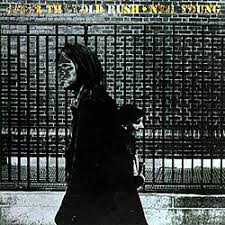
#82: After the Gold Rush (1970)
Artist: Neil Young
Reprise Records
Releasing in the exact same year as the bombastic, harmony-drenched triumph of CSNY's Déjà Vu, Neil Young’s third solo outing is a masterclass in the sheer power of pulling back. Retreating from the supergroup ego clashes, Young delivered an incredibly intimate, hauntingly beautiful record that feels like a lonely midnight transmission from a Topanga Canyon basement. It flawlessly bridges the gap between fragile acoustic folk and ragged, overdriven rock. One of the greatest pieces of trivia surrounding this album is Young recruiting a teenage Nils Lofgren—a guitarist by trade—and forcing him to play the piano, resulting in the beautifully unpolished, emotionally raw keys that anchor "Southern Man". In any serious stack of vinyl, this album stands out as an absolute foundational text for the singer-songwriter movement and arguably one of the many peaks of Young's vast, sprawling catalog.
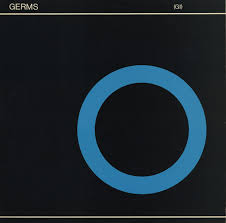
#83: (GI) (1979)
Artist: The Germs
Slash Records
If you want to isolate the exact moment when the artsy, glam-inflected first wave of Hollywood punk mutated into the violent, high-speed aggression of West Coast hardcore, you drop the needle on (GI). The Germs' sole full-length studio album is an absolute force of nature. Frontman Darby Crash delivered a masterclass in chaotic, nihilistic lyricism, howling over the top of Lorna Doom's thick basslines and Don Bolles' frantic drumming. But the absolute musical anchor of the record is a young Pat Smear, completely redefining punk guitar with his furious, buzzsaw tone and deceptively complex chord progressions. Produced by none other than Joan Jett — who brilliantly understood how to capture the band's notorious, self-destructive live energy on tape without polishing away the grime — the album remains a terrifying, essential monument to L.A. punk history.
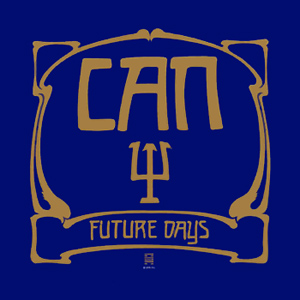
#84: Future Days (1973)
Artist: Can
United Artists Records
If 1970s krautrock was a race to see who could push rock music furthest into the cosmos, Can’s Future Days is the sound of a band successfully breaking orbit and dissolving into the atmosphere. Stepping away from the dense, aggressive grooves of their previous masterpieces, the band completely embraced ambient textures, creating a record that washes over the listener like a shimmering sonic ocean. It serves as the beautiful, hushed swan song for visionary vocalist Damo Suzuki, whose whispered, indecipherable melodies float perfectly alongside Irmin Schmidt’s lush keyboard washes. But underneath the airy production, the flawless rhythm section of Holger Czukay and Jaki Liebezeit continues to lay down an unbreakable, hypnotic foundation—a groove so profound that it would later serve as the direct inspiration for the entire post-punk movement. It is a brilliant, meditative triumph that essentially invented ambient pop decades before the rest of the world caught up.
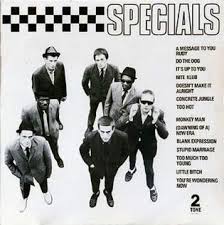
#85: The Specials (1979)
Artist: The Specials
2 Tone Records
If there is a flawless intersection between the aggressive, DIY energy of the late-'70s punk explosion and the irresistible, infectious groove of Jamaican rocksteady, it lives right here on The Specials' eponymous debut. Masterminded by keyboardist Jerry Dammers, this album didn't just launch the 2 Tone label—it practically birthed a cultural movement. Produced by Elvis Costello, the record perfectly captures the bleak, racial, and economic tension of late-'70s working-class Britain, yet filters that anxiety through completely undeniable, floor-shaking rhythms. With the brilliant dual vocal attack of Terry Hall's deadpan cynicism and Neville Staple's energetic toasting, tracks like "A Message to You, Rudy" and "Too Much Too Young" remain timeless. It is a razor-sharp, fiercely political record that essentially demands you get up and dance to it.
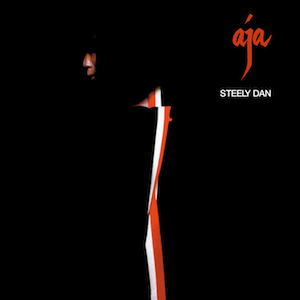
#86: Aja (1977)
Artist: Steely Dan
ABC Records
If there is a holy grail for audiophiles and studio obsessives, it is Steely Dan's 1977 masterpiece, Aja. Donald Fagen and Walter Becker pushed the absolute limits of jazz-rock fusion, treating the recording studio itself as their primary instrument and cycling through a revolving door of legendary session players to achieve sheer, unadulterated perfection. The entire album is flawless, but it is worth its weight in gold purely for "Deacon Blues." Clocking in at over seven minutes, it is a brilliantly cynical, lushly orchestrated anthem for the romanticized loser, packed with shimmering horns, pristine guitar work, and an untouchable groove. Because the album relies so heavily on its immaculate production and dynamic range, owning a pristine physical copy is mandatory. Thankfully, Geffen Records dropped a fantastic, highly acclaimed repressing a couple of years ago, ensuring those legendary session tracks sound just as crisp and vibrant on the turntable today as they did in the late '70s.

#87: Mother's Milk (1989)
Artist: Red Hot Chili Peppers
EMI Manhattan
A frantic, heavily fortified bridge between underground funk-punk and mainstream stadium rock, the Red Hot Chili Peppers' 1989 release Mother's Milk was forged out of profound tragedy and radical reconstruction. Following the devastating loss of founding guitarist Hillel Slovak, the band was forced to completely rebuild their structural engine, successfully recruiting powerhouse drummer Chad Smith and an 18-year-old guitar prodigy named John Frusciante. From an engineering standpoint, the album is wildly aggressive and densely packed, heavily saturated in the massive, metallic 1980s reverb and thick guitar crunch that the band would later intentionally abandon. Yet, operating beneath that chaotic, over-the-top sonic architecture, the raw, undeniable chemistry of this newly cemented lineup is staggering. Driven by the furious, slap-bass-heavy reinvention of Stevie Wonder's "Higher Ground" and the highly emotional, driving tribute "Knock Me Down," it stands as a vital, fiercely energetic rebirth for a band actively fighting for its own survival.
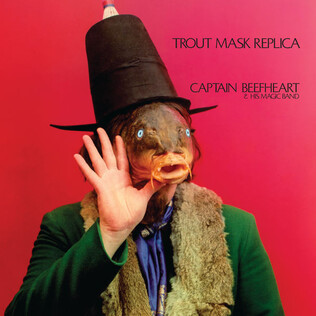
#88: Trout Mask Replica (1969)
Artist: Captain Beefheart and his Magic Band
Straight Records
If there is any album in the history of rock music that requires a survival guide for first-time listeners, it is Captain Beefheart's Trout Mask Replica. Produced by Frank Zappa, the record is a completely unhinged, polyrhythmic collision of Delta blues, free jazz, and avant-garde poetry. It famously required months of brutal, cult-like rehearsal for the Magic Band to perfectly memorize Beefheart's chaotic, dissonant compositions. While my own initial exposure to this monolith was via the 1990 Reprise CD reissue, I highly recommend that newcomers tackle this beast on vinyl if at all possible. This has absolutely nothing to do with audiophile snobbery; rather, it is a matter of pacing. The sheer, relentless eccentricity of the music can be incredibly overwhelming in a single, uninterrupted digital sitting. Breaking the album down into four physical, manageable sides allows the virgin listener a much-needed moment to breathe, flip the wax, and mentally prepare for the next wave of beautiful, bizarre noise.
#89: Flip Your Wig (1985)
Artist: Hüsker Dü
SST Records
As a first introduction to Hüsker Dü, you could not ask for a more perfect gateway drug than Flip Your Wig. Arriving in 1985 as their final release for the legendary indie label SST Records before making the controversial leap to the majors, it represents the exact, glorious pivot point of their entire career. Producing the album themselves, Bob Mould and Grant Hart effectively dialed back the blinding, hyper-aggressive speed of their hardcore roots just enough to let their incredible, 1960s-inspired pop melodies shine through. Yet, they miraculously managed to keep the iconic, buzzsaw guitar tone completely intact. With masterpieces like "Makes No Sense at All" and "Keep Hanging On," the album practically wrote the blueprint for the massive alternative rock explosion of the 1990s. It is a brilliant, fuzzy, infectious triumph that proves punk rock and pure pop perfection do not have to be mutually exclusive.
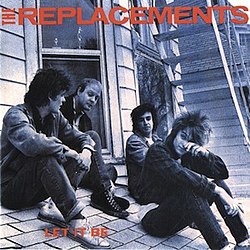
#90: Let It Be (1984)
Artist: The Replacements
Twin/Tone Records
Positioned perfectly alongside their Minneapolis brethren in Hüsker Dü, The Replacements' Let It Be is the sound of the ultimate beautiful losers suddenly realizing they are actually brilliant. Released in 1984, the album marks a massive evolutionary leap for frontman Paul Westerberg, who boldly sheds the drunken, high-speed hardcore thrash of their earlier releases to bare his soul. It is an album of staggering contrasts: seamlessly shifting from the aching, ragged vulnerability of "Unsatisfied" and the poignant coming-of-age anxiety of "Sixteen Blue," to the swaggering jangle-pop of "I Will Dare" (featuring a legendary guest guitar solo by R.E.M.'s Peter Buck). They even managed to throw in a genuinely moving piano ballad with "Androgynous" and an unironic cover of KISS's "Black Diamond." It is messy, deeply human, and completely untouchable, capturing the exact moment when alternative rock figured out how to grow up without entirely sobering up.
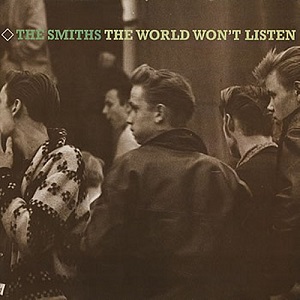
#91: The World Won't Listen (1987)
Artist: The Smiths
Rough Trade
While it was assembled by Rough Trade in the UK specifically to compile stray singles and B-sides between proper studio full-lengths, The World Won't Listen operates as an absolute masterclass in sequencing. Any compilation that successfully stacks "Panic," "Ask," and "Bigmouth Strikes Again" alongside the blistering "London" all within the first four tracks is completely immune to criticism. It is a completely relentless, front-loaded sequence of flawless indie-pop melancholy and Johnny Marr's jangling Rickenbacker brilliance. Because it gathers so many of their most infectious, high-energy singles in one convenient place, it bypasses the deeper thematic pacing of their studio albums, cementing its status as the absolute perfect Smiths record to reach for when you need a flawless mixtape for the car.
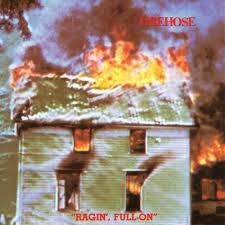
#92: Ragin', Full On (1986)
Artist: fIREHOSE
SST Records
Emerging from the heartbreak of D. Boon's passing, Ragin', Full On is the sound of survival and reinvention. Pushed back into action by the sheer, stubborn enthusiasm of Ed Crawford, Mike Watt and George Hurley brought their unparalleled rhythm section back to the world. The album takes the jagged, "econo" funk-punk foundation of the Minutemen and stretches it into something slightly more melodic, setting a crucial stepping stone for the '90s alternative rock explosion. Watt's bass playing is as wandering, intricate, and utterly dominant as ever. Studying his technique on these mid-80s SST albums was a rite of passage for any serious bass player. But what is even more remarkable than his musicianship is his absolute lack of rock-star pretense. To go from dissecting his playing note-for-note in early cover bands to counting him as a close friend since 1997 — and even having him lay down a groove on one of my own tracks — speaks volumes about the enduring, unbreakable, and genuinely welcoming spirit of the Pedro punk scene.

#93: Everything Falls Apart (1983)
Artist: Hüsker Dü
Reflex Records
Before Bob Mould and Grant Hart completely mastered the art of burying pristine pop melodies under a wall of fuzz, they were simply the fastest, most furious band in the Midwest. Released in 1983, Everything Falls Apart represents the absolute peak of their hardcore era—a relentless, breakneck sprint of a record that barely gives you time to breathe. (Though their sneering, hyper-speed cover of Donovan's "Sunshine Superman" certainly hinted at the pop instincts lurking just beneath the surface). Despite being a completely crucial document of the American underground, the album was criminally out of print and notoriously difficult to track down for years. For an entire generation of fans, it only existed as the expanded 1993 Rhino Records CD reissue, Everything Falls Apart and More, before the archival heroes at Numero Group finally gave the era the definitive, deluxe treatment it deserved on the staggering 2017 Savage Young Dü box set. (A hint to the folks at Numero as well as Bob, Greg, and Grant's widow Brigid: a stand-alone vinyl reissue of the album would be nice so that there isn't that gaping hole in my Hüsker Dü vinyl library!)
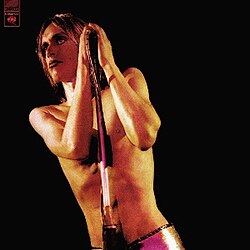
#94: Raw Power (1973)
Artist: Iggy and The Stooges
Columbia Records
If their 1969 debut laid the foundation for punk rock, Raw Power actively handed it a loaded weapon. Relocating to London and bringing James Williamson into the fold on guitar—while shifting Ron Asheton to bass—Iggy and The Stooges delivered a vicious, unapologetic masterpiece. Williamson's playing is absolutely feral, driving iconic tracks like "Search and Destroy" and "Gimme Danger" with a menacing, predatory swagger. The album's legacy is forever tied to its polarizing studio history, starting with David Bowie's original 1973 mix, which was famously thin and treble-heavy. In 1997, Iggy Pop finally took control of the master tapes, delivering a notoriously blown-out, hyper-compressed remix that deliberately pushed every single meter into the red. While both mixes absolutely have their merits and deserve a spot on the shelf, Iggy's unapologetic, ear-bleeding reinvention is the one that truly lives up to the album's name. It is a relentless, physical assault that demands to be played at maximum volume.

#95: Joshi Noise Worship: Women's Most Violent (2020)
Artist: Slit Throats
Phage Tapes
It might be the most obscure entry on this list to the uninitiated (so far), but Joshi Noise Worship: Women's Most Violent is a brilliant, terrifying collision of two highly specific subcultures: harsh underground noise and the brutal, theatrical pageantry of Japanese women's professional wrestling. Released in 2020 on Phage Tapes, Slit Throats - the noise project of Ohio-based musican Roman Levya - essentially translates the visceral danger of a barbed-wire deathmatch into a pure, physical audio assault. With track titles like "Slice With The Sickle No Rules," it is an unrelenting 2xCD wall of abrasive static, shrieking feedback, and punishing electronics that demands to be felt just as much as it is heard. It perfectly captures the high-octane violence and incredible athleticism of joshi puroresu — a conceptual connection Leyva would later solidify by dedicating an entire sequel album specifically to the legendary Kana (better known globally as Asuka). For anyone who appreciates the uncompromising sonic extremes of the noise scene alongside the absolute warriors of the squared circle, this is a mandatory, albeit deeply punishing, listen.

#96: Goo (1990)
Artist: Sonic Youth
DGC Records
With 1990's Goo, Sonic Youth achieved the impossible: they signed to a major label and somehow became even cooler. Acting as the crucial bridge between the 1980s indie-rock underground and the imminent 1990s alternative explosion (and effectively paving the way for Nirvana to follow them to DGC Records), the album is a masterpiece of controlled chaos. Thurston Moore, Kim Gordon, and Lee Ranaldo reigned in their sprawling, avant-garde noise jams just enough to craft actual pop structures, but smothered them in glorious, dissonant feedback and bizarre alternate tunings. Buoyed by Raymond Pettibon's legendary cover art, the record acts as a deeply cynical, pop-culture-obsessed snapshot of the era. From the charging, anthemic fuzz of "Dirty Boots" to the iconic, Chuck D-assisted swagger of "Kool Thing," Goo proved beyond a shadow of a doubt that a band could infiltrate the corporate music machine without sacrificing a single ounce of their artistic integrity.

#97: Computer World (1981)
Artist: Kraftwerk
Warner Bros. Records
Kraftwerk’s Computer World is a pristine marvel of electronic premonition, predicting the digital, interconnected future with chilling accuracy. But its most fascinating legacy isn't just its influence on synth-pop; it is the incredible, unlikely bridge it built to the hip-hop underground. I had grabbed a copy in 1981 out of sheer curiosity, just to figure out why a German electronic act was stubbornly hovering in the lower half of the Billboard Black Album chart for months on end, is a rite of passage. That mystery famously wouldn't unravel until years later when those unmistakable, robotic pings — especially the heavy, driving groove of "Numbers" — started regularly cropping up as samples on Yo! MTV Raps. The reality behind that chart anomaly is one of the greatest testaments to the record's rhythmic power: hip-hop DJs were buying up multiple vinyl copies to manually juggle the breaks for freestyling MCs, while breakdancers were wearing out the cassette versions practicing their routines on the pavement. It is a flawless, visionary masterpiece that accidentally laid the groundwork for an entirely different musical revolution. Make that two, if you want to point at the origins of Detroit techno, of course...

#98: FanMail (1999)
Artist: TLC
LaFace Records
Arriving at the very edge of the new millennium, TLC’s FanMail completely rewrote the rulebook for contemporary R&B. After enduring massive, highly publicized financial and label struggles, Tionne "T-Boz" Watkins (my bias, as the say in the K-Pop world), Lisa "Left Eye" Lopes, and Rozonda "Chilli" Thomas returned with an album that sounded like it had been beamed in from the future. Producers like Dallas Austin and Babyface surrounded the trio’s flawless vocal chemistry with cold, futuristic synths, glitchy beats, and incredibly sharp, modern songwriting. The resulting sound perfectly captured the digital anxiety and excitement of the looming Y2K era. Boasting completely undeniable, monolithic singles like the blistering kiss-off "No Scrubs" and the deeply empathetic "Unpretty," the album proved TLC weren't just participating in the current pop landscape—they were actively designing what it would sound like for the next decade. It is a slick, fiercely independent, and endlessly replayable masterclass in pop-R&B perfection.
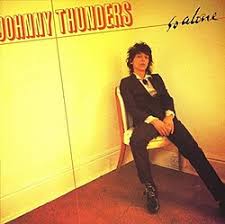
#99: So Alone (1978)
Artist: Johnny Thunders
Real Records
If there is a single document that captures the tragic, beautiful, and utterly sleazy essence of rock and roll romanticism, it is Johnny Thunders' solo debut, So Alone. Fresh from the collapse of the New York Dolls and The Heartbreakers, Thunders decamped to London and somehow managed to assemble an absolute supergroup of rock royalty to back him up—including Phil Lynott of Thin Lizzy, Steve Jones and Paul Cook of the Sex Pistols, and Peter Perrett of The Only Ones. The result is a chaotic, drug-fueled masterpiece of sloppy, swaggering punk rock that leans heavily on his razor-sharp guitar tone. Amidst blistering rockers and a ferocious cover of the Surfaris' "Pipeline," the album is permanently anchored by "You Can't Put Your Arms Around a Memory," a devastatingly vulnerable, world-weary ballad that completely strips away the leather-clad posturing to reveal the broken heart underneath. It is an enduring, heartbreaking triumph from one of punk's most legendary and doomed architects.
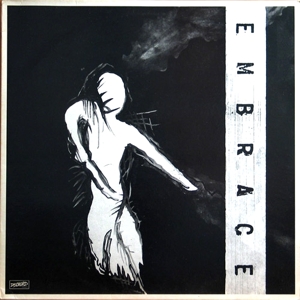
#100: Embrace (1987)
Artist: Embrace
Dischord Records
Closing out the first massive chapter of this list is the sound of a pioneer burning his own rulebook. Following the demise of Minor Threat, Ian MacKaye became increasingly disillusioned with the violent, formulaic direction the hardcore scene had taken. Formed during D.C.’s pivotal 1985 "Revolution Summer," Embrace shifted the intensity from outward aggression to deeply personal, inward-looking vulnerability. Driven by MacKaye's strained, impassioned vocals and a slightly slower, more dynamic musical approach, the band's sole, eponymous album inadvertently laid the foundational blueprint for "emotional hardcore" (a genre tag MacKaye notoriously and fiercely rejected). Tracks like "Money" and "No More Pain" retain all the raw, jagged power of punk, but channel it into profound self-reflection and emotional accountability. Released posthumously in 1987 after the band had already splintered, it stands as a brilliant, necessary evolutionary leap that ultimately paved the way for Fugazi.