

Favorites: Producers (and Engineers)
The men behind the mixing desk.
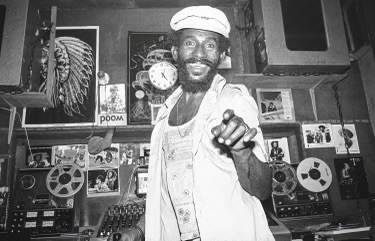
Lee "Scratch" Perry
- Notable Artists: Bob Marley and the Wailers, The Congos, Max Romeo, Junior Murvin, The Upsetters, The Clash
- Studio(s) of Choice: The Black Ark (Kingston, Jamaica)
- Notable Albums: Heart of the Congos (The Congos), War Ina Babylon (Max Romeo), Super Ape (The Upsetters), Police and Thieves (Junior Murvin)
The undisputed architect of dub and the ultimate pioneer of treating the recording studio as a primary instrument, Lee "Scratch" Perry completely shattered the boundaries of modern music production. Operating out of his legendary, self-built Black Ark studio in Kingston, Jamaica during the 1970s, Perry conjured impossibly dense, psychedelic soundscapes using incredibly primitive gear—most notably a simple four-track tape machine and a Roland Space Echo. By aggressively manipulating the mixing desk, dropping out the mid-range to isolate heavy drum-and-bass grooves, and heavily layering eccentric sound effects, he forged a radical, delay-drenched sonic architecture that laid the crucial groundwork for all electronic and remix culture that followed. He remains an endless well of inspiration for any producer who views the mixing board as a boundless, experimental canvas.
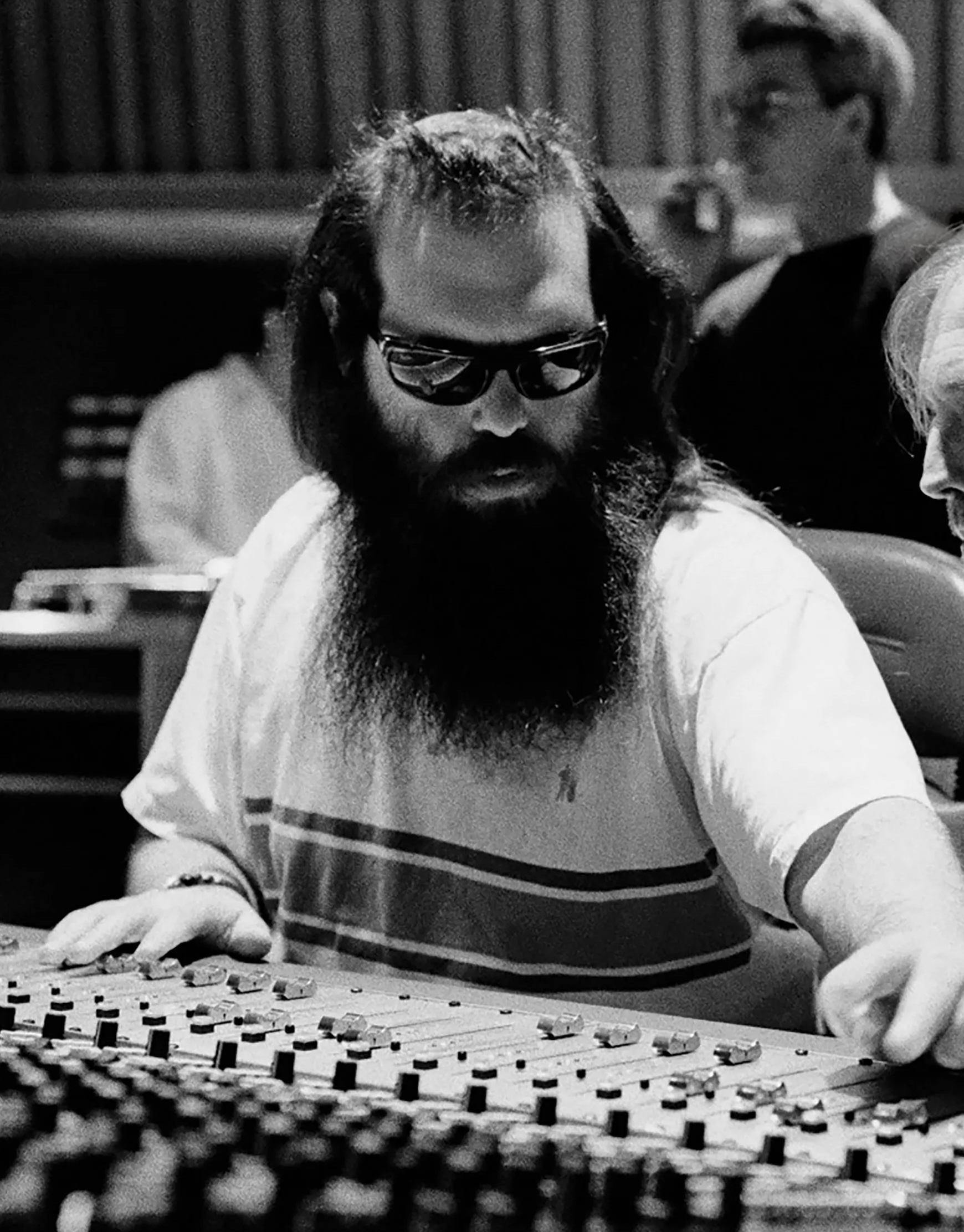
Rick Rubin
- Notable Artists: Beastie Boys, Slayer, Johnny Cash, Run-DMC, Red Hot Chili Peppers, Tom Petty, System of a Down
- Studio(s) of Choice: Shangri-La (Malibu, CA), The Mansion (Laurel Canyon, CA), Chung King Studios (New York, NY)
- Notable Albums: Reign in Blood (Slayer), Licensed to Ill (Beastie Boys), Blood Sugar Sex Magik (Red Hot Chili Peppers), American Recordings (Johnny Cash)
Operating more as a minimalist guru and a sonic "reducer" than a traditional studio technician, Rick Rubin is responsible for some of the most crucial, stripped-down masterworks across multiple genres. Famously launching Def Jam Recordings out of his New York University dorm room, he fundamentally bridged the gap between hip-hop and hard rock, utilizing massive, unadorned drum breaks and heavy guitar riffs to propel acts like Run-DMC and the Beastie Boys into the global stratosphere. His true genius, however, lies in his ability to ruthlessly strip away studio artifice and overproduction to expose the absolute psychological core of an artist. Whether he was engineering the breathtaking, terrifying speed of Slayer's Reign in Blood, isolating the dry, funk-rock skeletal grooves of the Red Hot Chili Peppers, or stripping Johnny Cash down to nothing but a weathered voice and an acoustic guitar for one of the greatest late-career resurrections in audio history, Rubin's philosophy of radical subtraction has left an undeniable, monolithic footprint on modern recording.
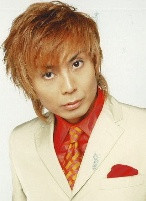
Tsunku♂
- Notable Artists: Morning Musume, MiniMoni, Hello! Project, Sharam Q, Aya Matsuura, Berryz Kobo, °C-ute
- Studio(s) of Choice: Up-Front Studio (Tokyo, Japan)
- Notable Projects: Platinum 9 Disc (Morning Musume), MiniMoni Songs 2 (MiniMoni), Duo U&U (W), First Kiss (Aya Matsuura), Rhythm Heaven (Video Game Franchise Soundtrack)
An absolute titan of the Japanese music industry, Tsunku♂ (Mitsuo Terada) is the mastermind who practically authored the modern blueprint for the idol group complex. Transitioning from his role as the frontman of the successful 90s rock band Sharam Q, he took total creative control over the formation of Morning Musume and the overarching Hello! Project empire. What makes Tsunku's production style so vital and deeply respected among audio nerds is his underlying musical foundation. Rather than relying on generic, saccharine pop structures, he infused his idol productions with highly complex vocal arrangements, surprisingly dense 1970s disco and funk grooves, and an incredibly tight, syncopated sense of rhythm. That flawless internal metronome and understanding of the groove eventually led him to compose and produce the beloved, rhythmically demanding Rhythm Heaven video game franchise for Nintendo. For an archivist tracking the architecture of massive, unyielding pop hooks, Tsunku's prolific, decades-spanning catalog is an absolute goldmine of studio genius.
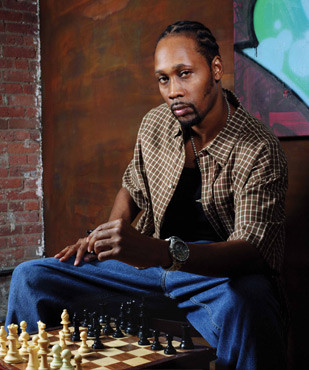
RZA
- Notable Artists: Wu-Tang Clan, Method Man, Raekwon, GZA, Ghostface Killah, Ol' Dirty Bastard
- Studio(s) of Choice: 36 Chambers Studio (New York, NY)
- Notable Projects: Enter the Wu-Tang (36 Chambers) (Wu-Tang Clan), Liquid Swords (GZA), Only Built 4 Cuban Linx... (Raekwon), Kill Bill Vol. 1 & 2 (Original Soundtracks)
The undisputed Abbott of the Wu-Tang Clan, RZA (Robert Fitzgerald Diggs) engineered a dark, atmospheric sonic architecture that fundamentally rewired the sound of 1990s East Coast hip-hop. Operating out of his legendary 36 Chambers studio, he initially built his reputation on an incredibly gritty, lo-fi aesthetic. By masterfully chopping obscure Stax soul records on his Ensoniq EPS and ASR-10 samplers, layering them over thick, unquantized, slightly off-kilter drum loops, and seamlessly weaving in esoteric martial arts dialogue, he created a universe entirely his own. The sheer, cinematic density of these beats made the instrumental cuts of early Wu-Tang 12-inch singles absolute goldmines for vinyl collectors. However, what truly cements RZA's legacy as a generational mastermind is his staggering musical evolution. Defying all expectations, he successfully transitioned from crafting heavily chopped, sample-based street anthems to becoming a sophisticated composer who plays multiple live instruments. Evolving from the drum machine to arranging lush orchestrations, conducting live ensembles, and scoring major Hollywood films, he is the ultimate testament to a hip-hop producer outgrowing the sampler and conquering the entire musical canvas.